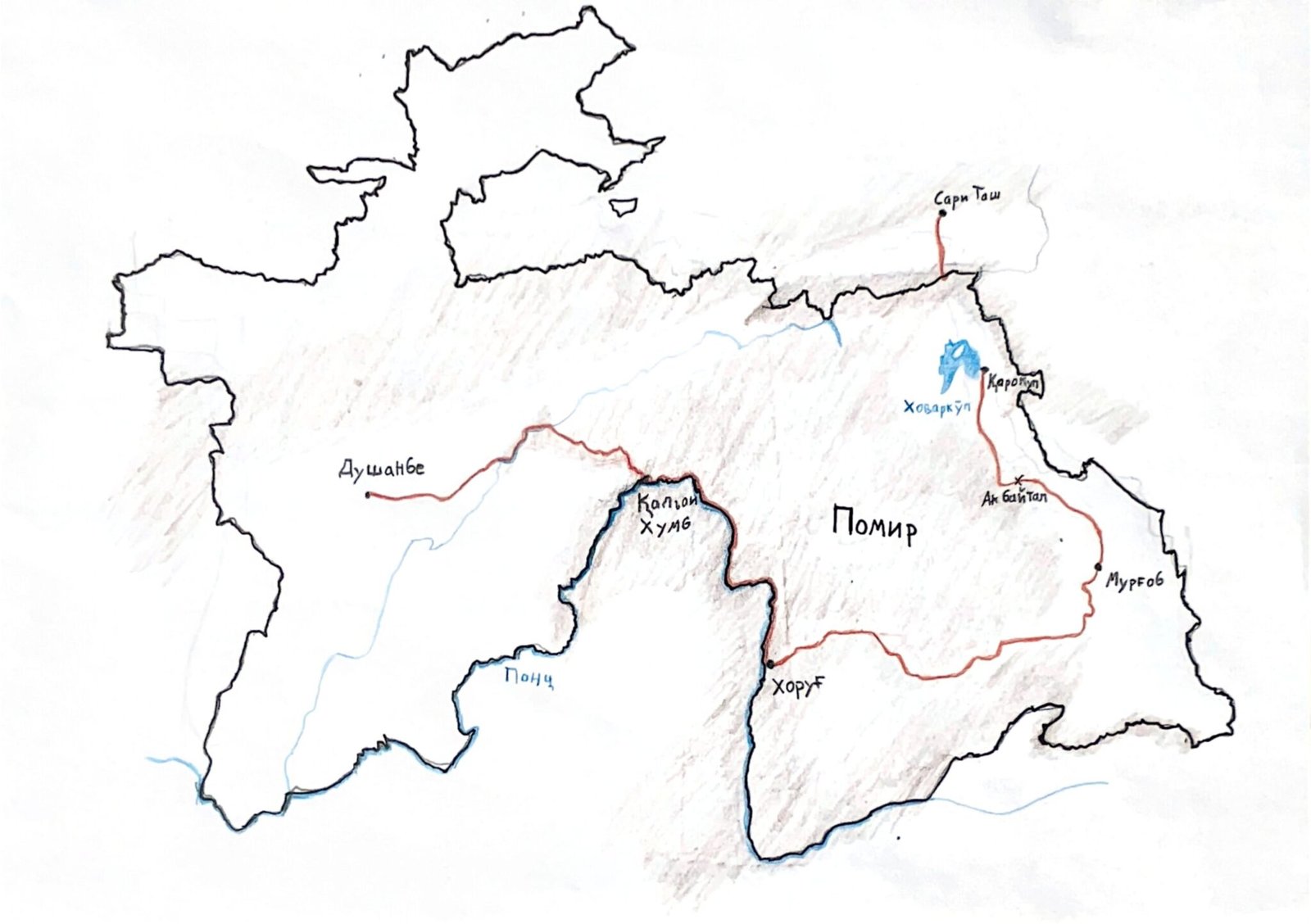
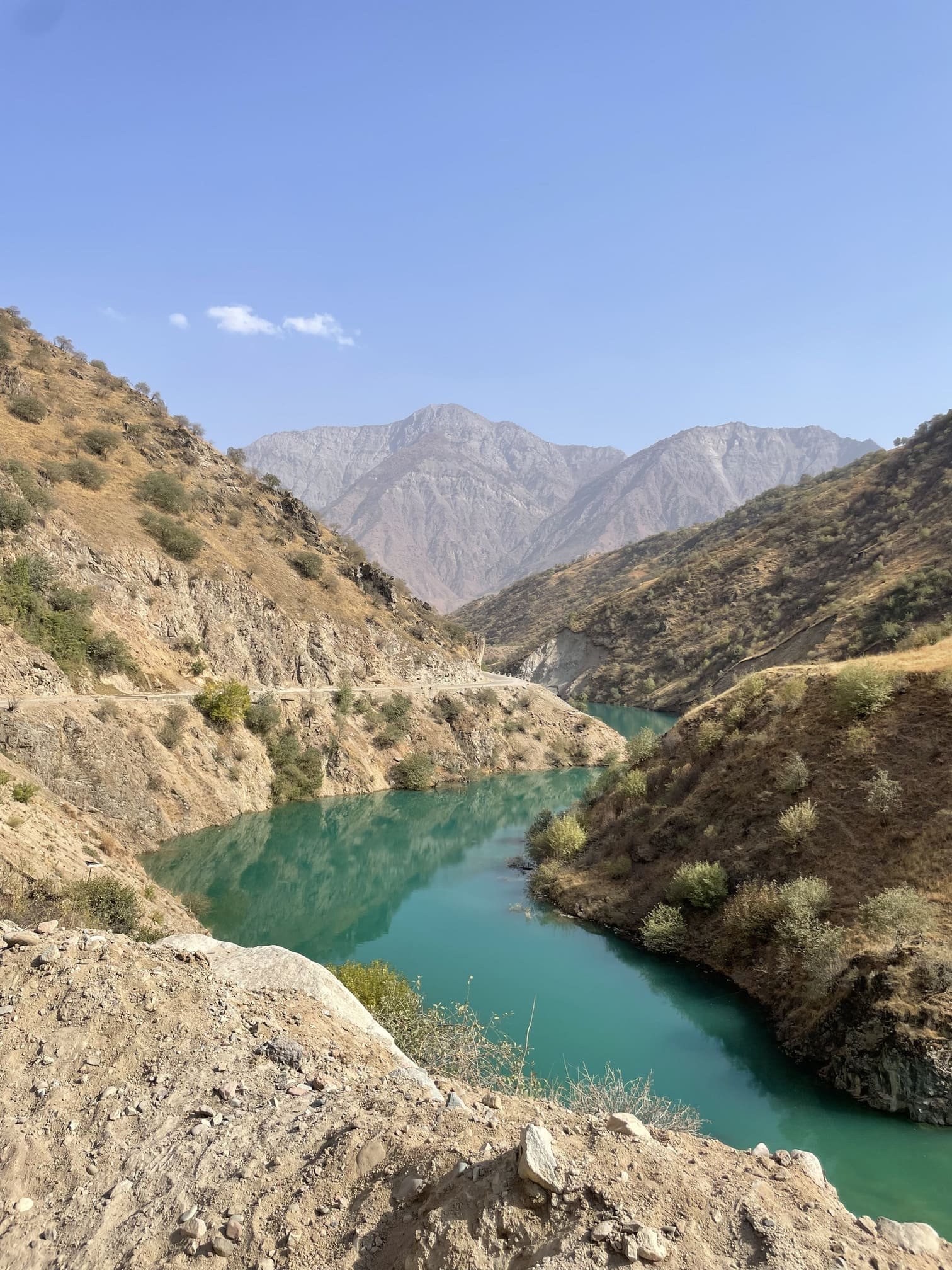
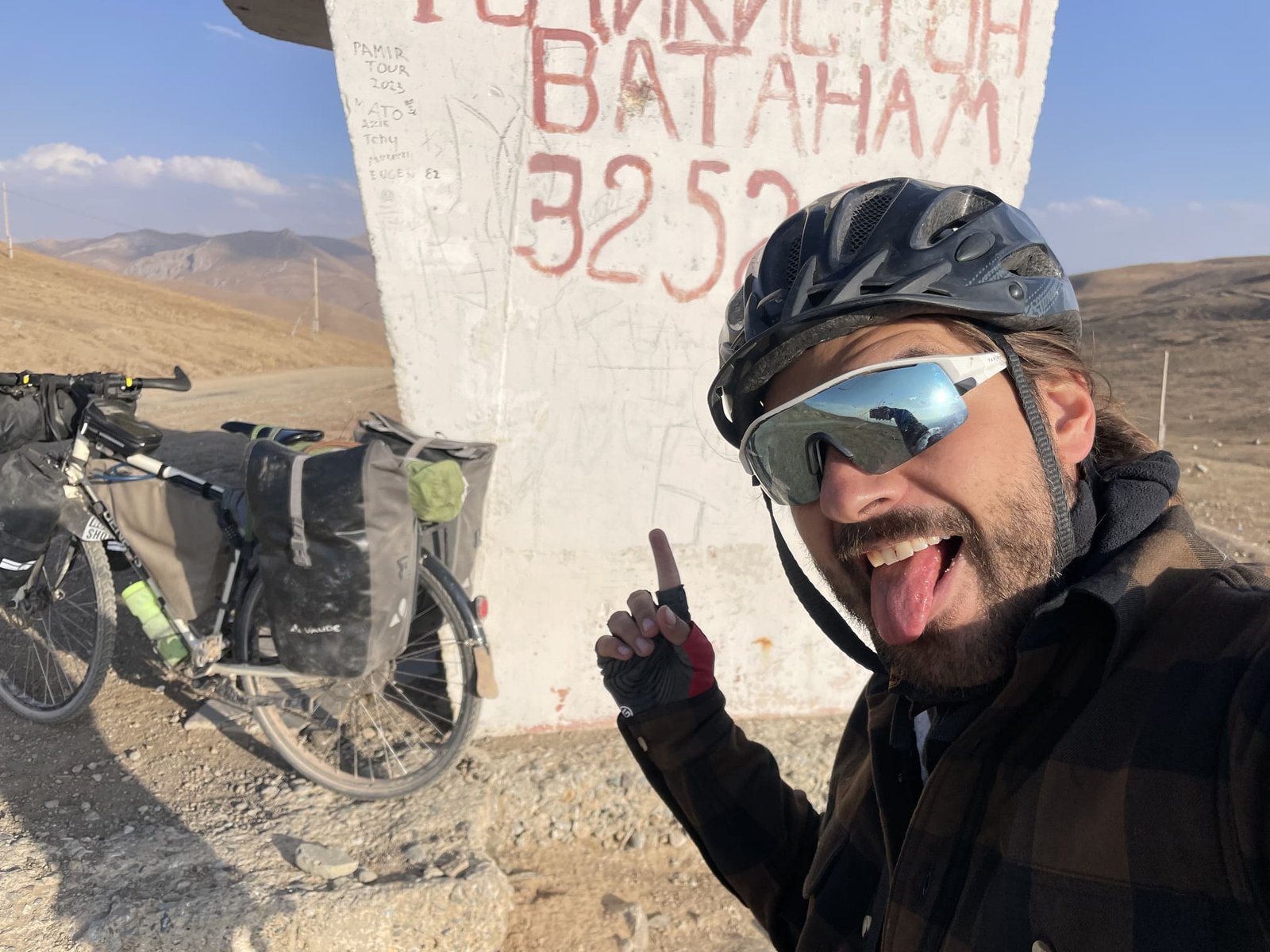
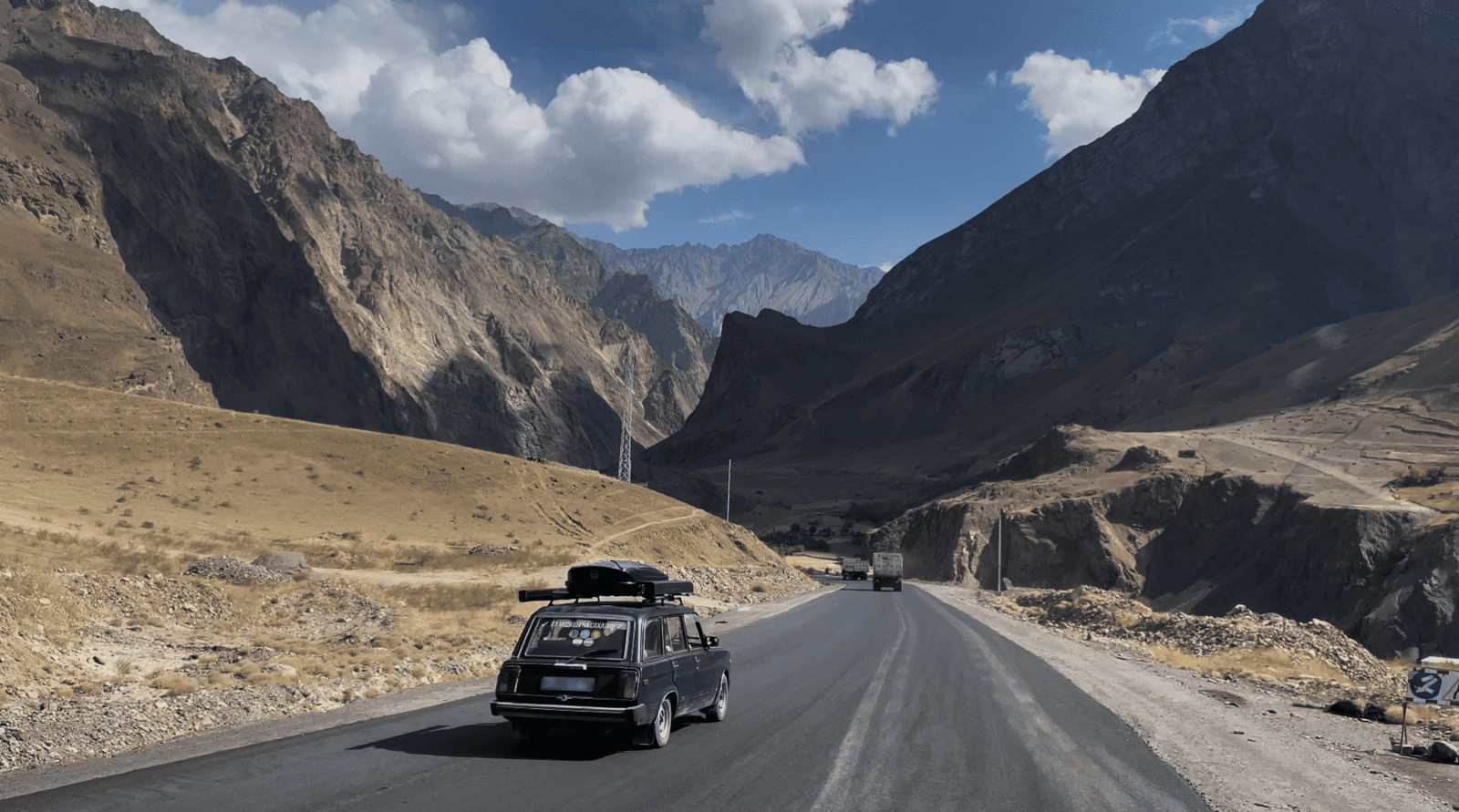
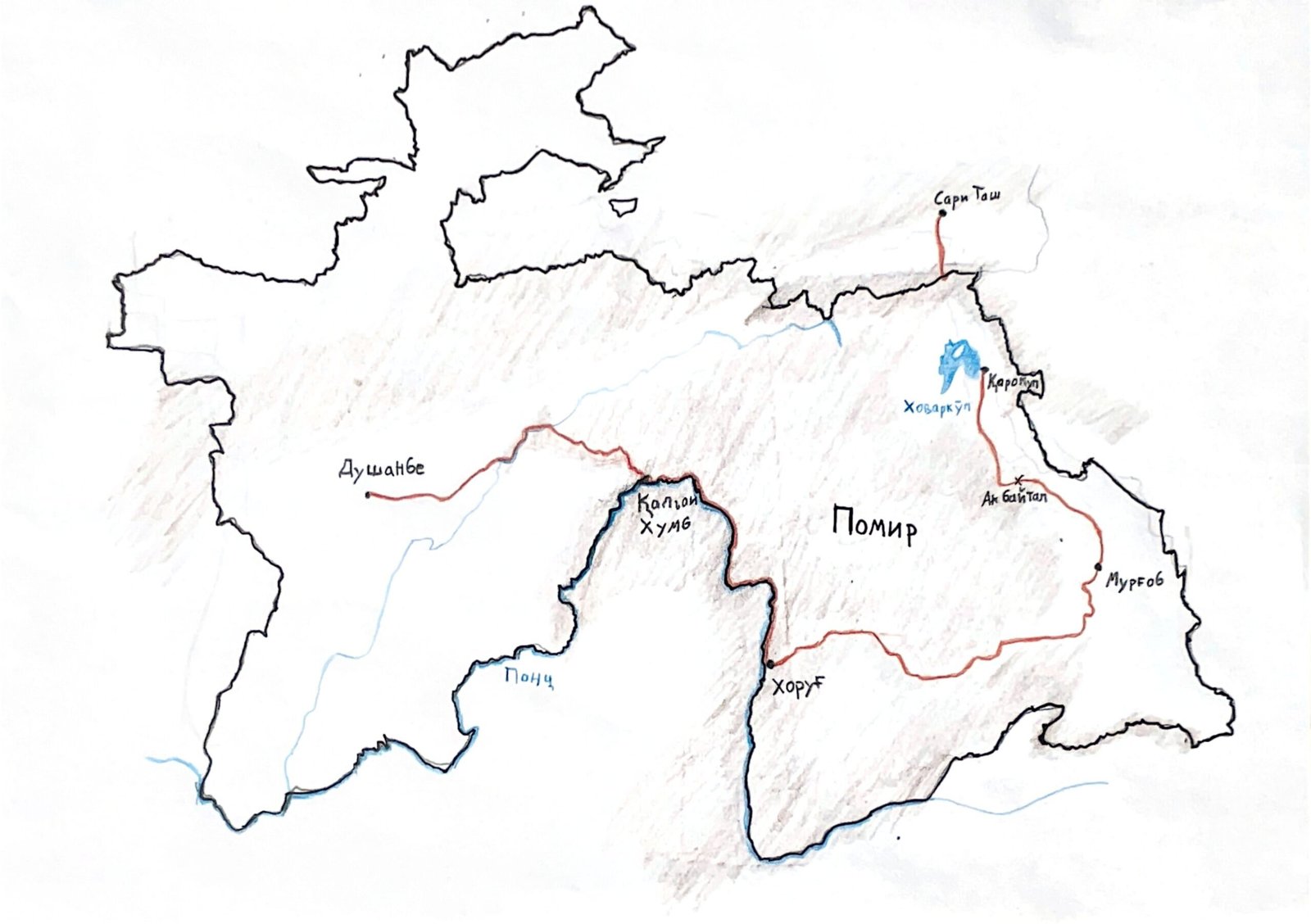
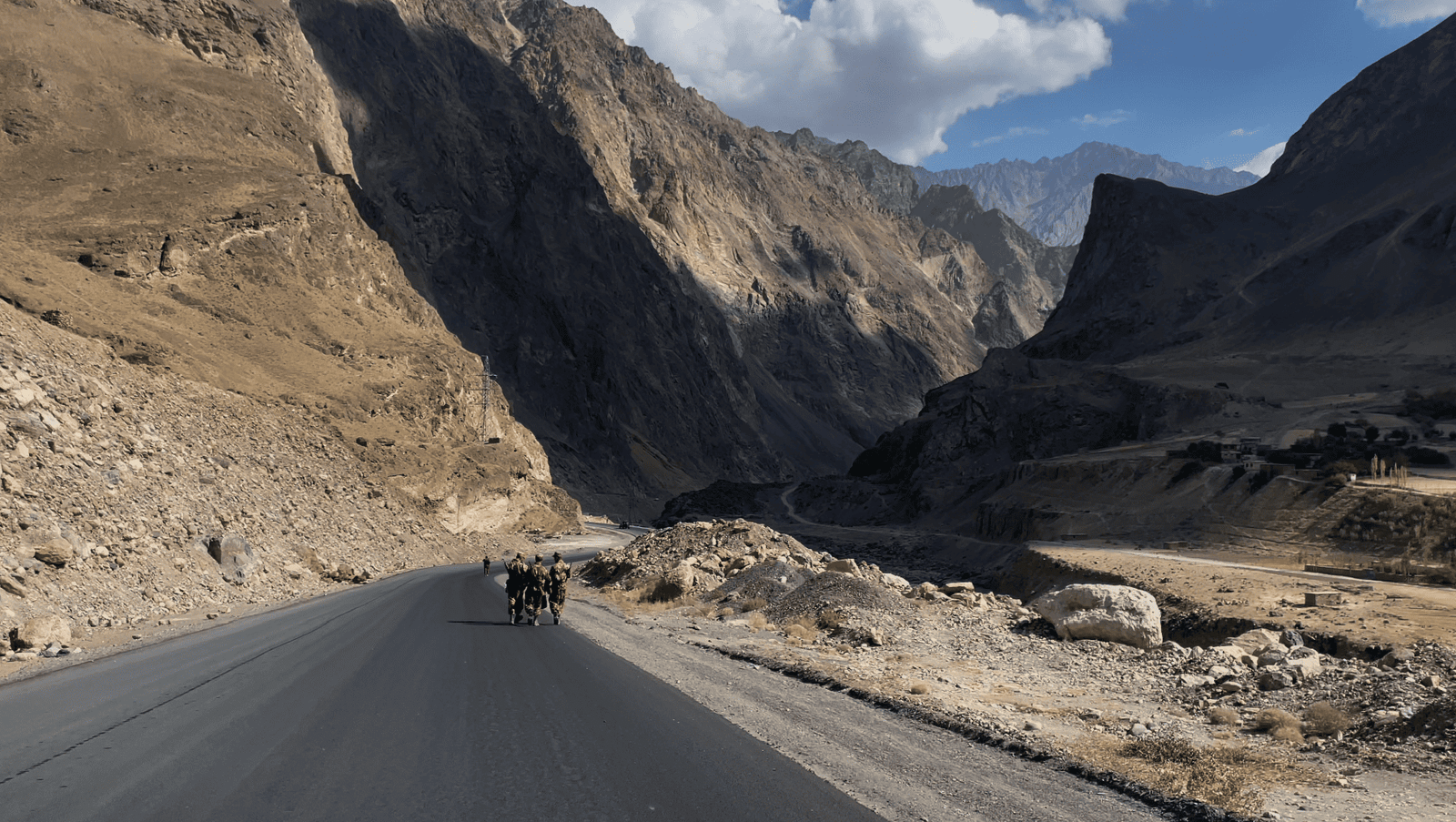
In late September 2025, halfway through my journey from Mongolia to the -Stan countries of the former USSR, I’m getting ready to set out on a route that’s legendary among bicycle travelers. From Dushanbe in Tajikistan to Osh in Kyrgyzstan, the Pamir Highway (or Mountains) offers a host of first-time experiences to anyone who undertakes the journey:
Traveling along roads (which are sometimes barely recognizable as such) shaped by the history of the Silk Road
Discovering extremely isolated peoples and cultures
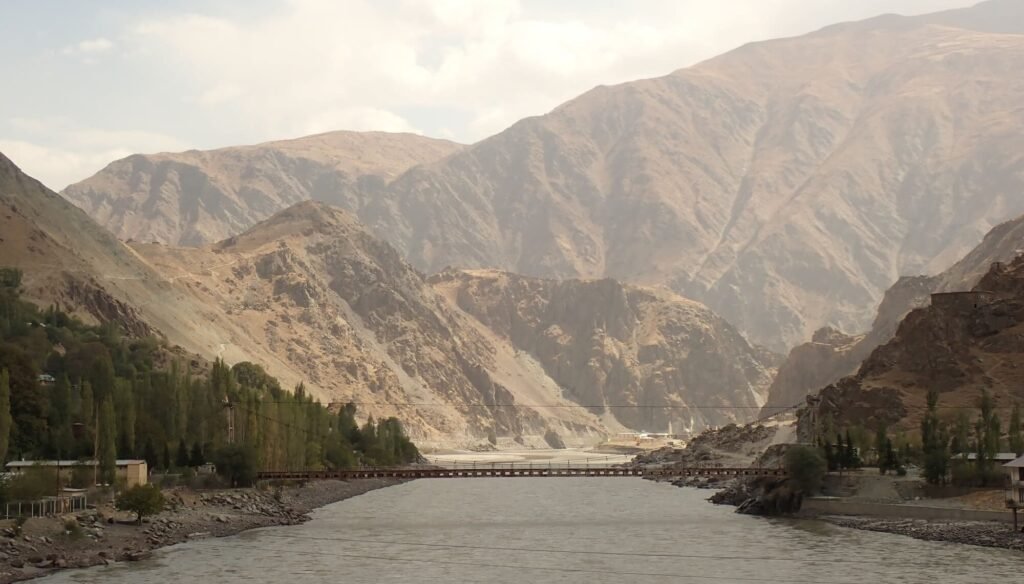
Traveling along the Panj River and through Afghanistan
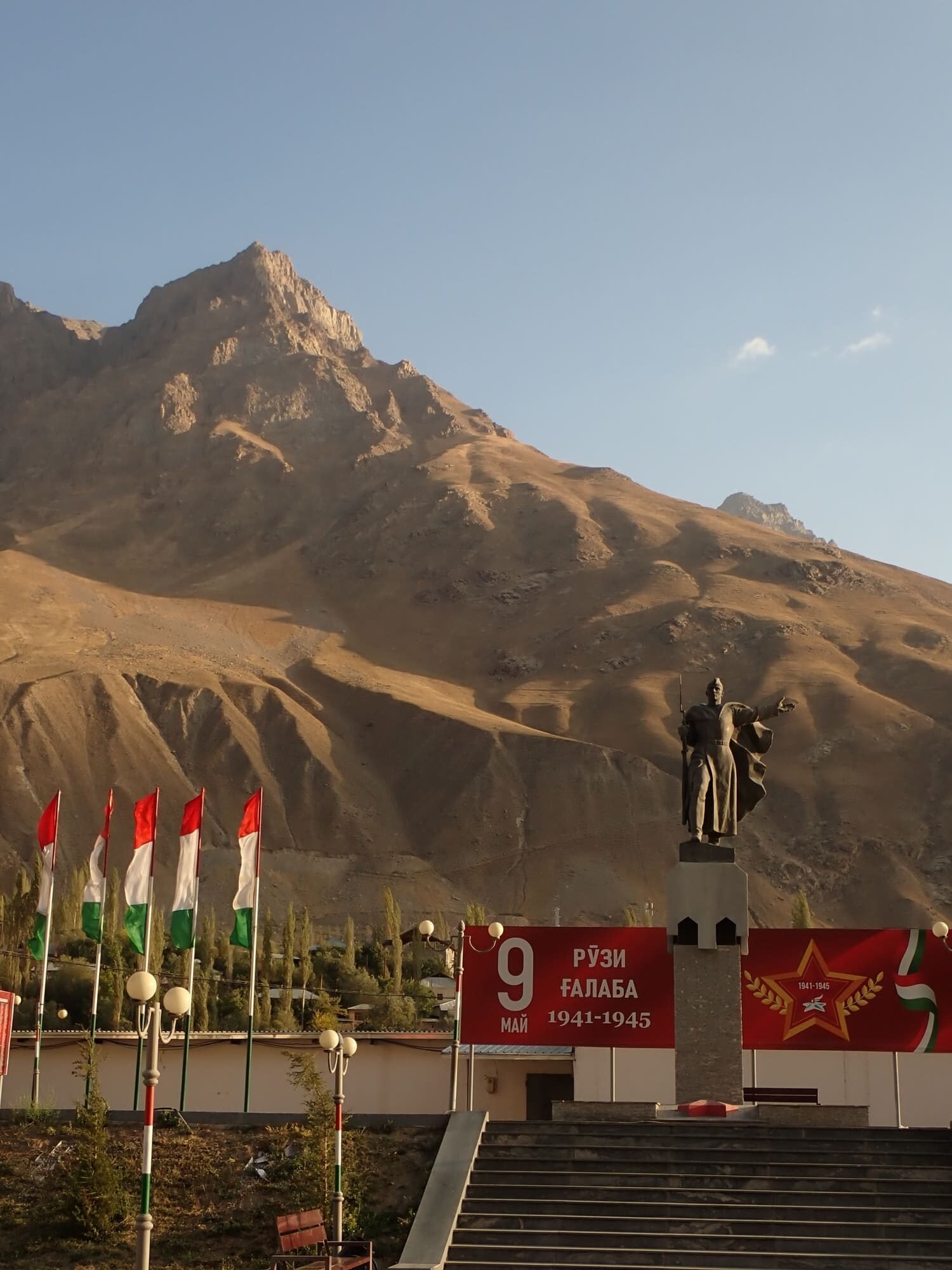
Contemplating the influences of the USSR in the past and China in the present
And, of course, conquering a peak over 4,600 meters high. After all, it is one of the highest roads in the world.
As you read these lines, you’ll discover just one adventure among thousands of others. (Interactive map available)
1. The Start and a Scare
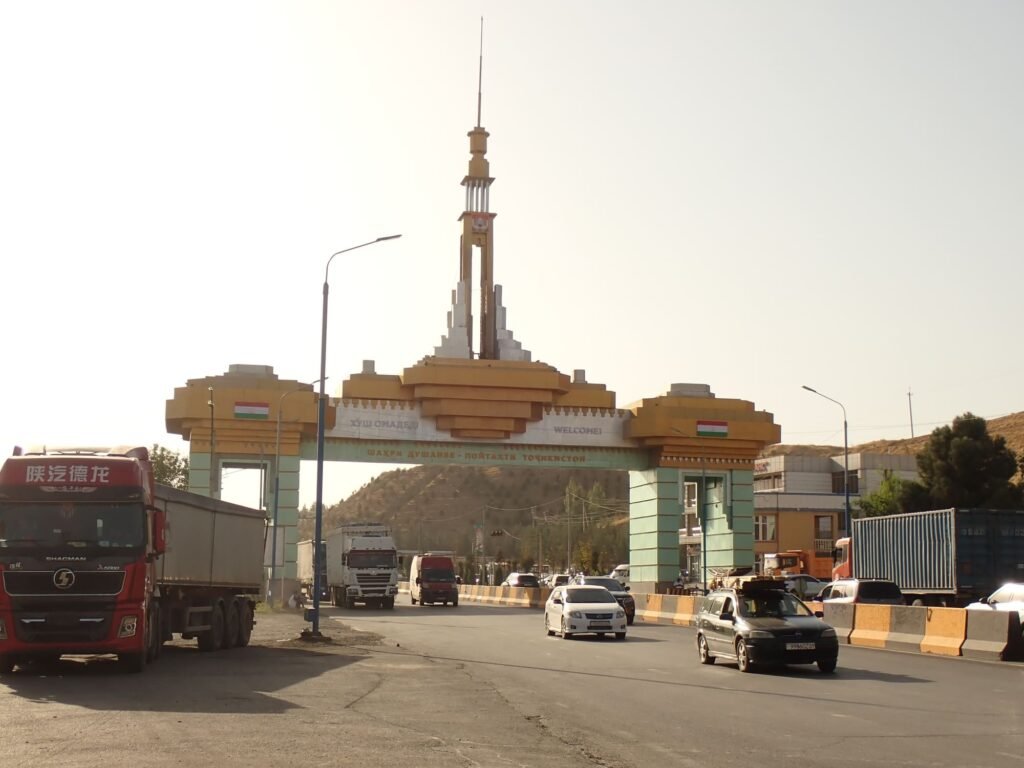
27th September 2025 16:00 – Dushanbe Eastern Suburbs
With my permit in hand, here I am heading for Upper Badakhshan—commonly known as GBAO—the Tajik section of the famous Pamir Mountains. Following in the footsteps of history’s greatest land explorers, my heart is torn between excitement and apprehension. I’ve seen thousands of photos and videos of these rugged mountains. I’ve never seen them with my own eyes, and yet they already feel familiar to me.
Questions are racing through my mind: How will I feel when I see them for real? How will my body react in such a remote area? What will the food be like, how will I handle the altitude, and what will the people be like in this seemingly hostile territory?
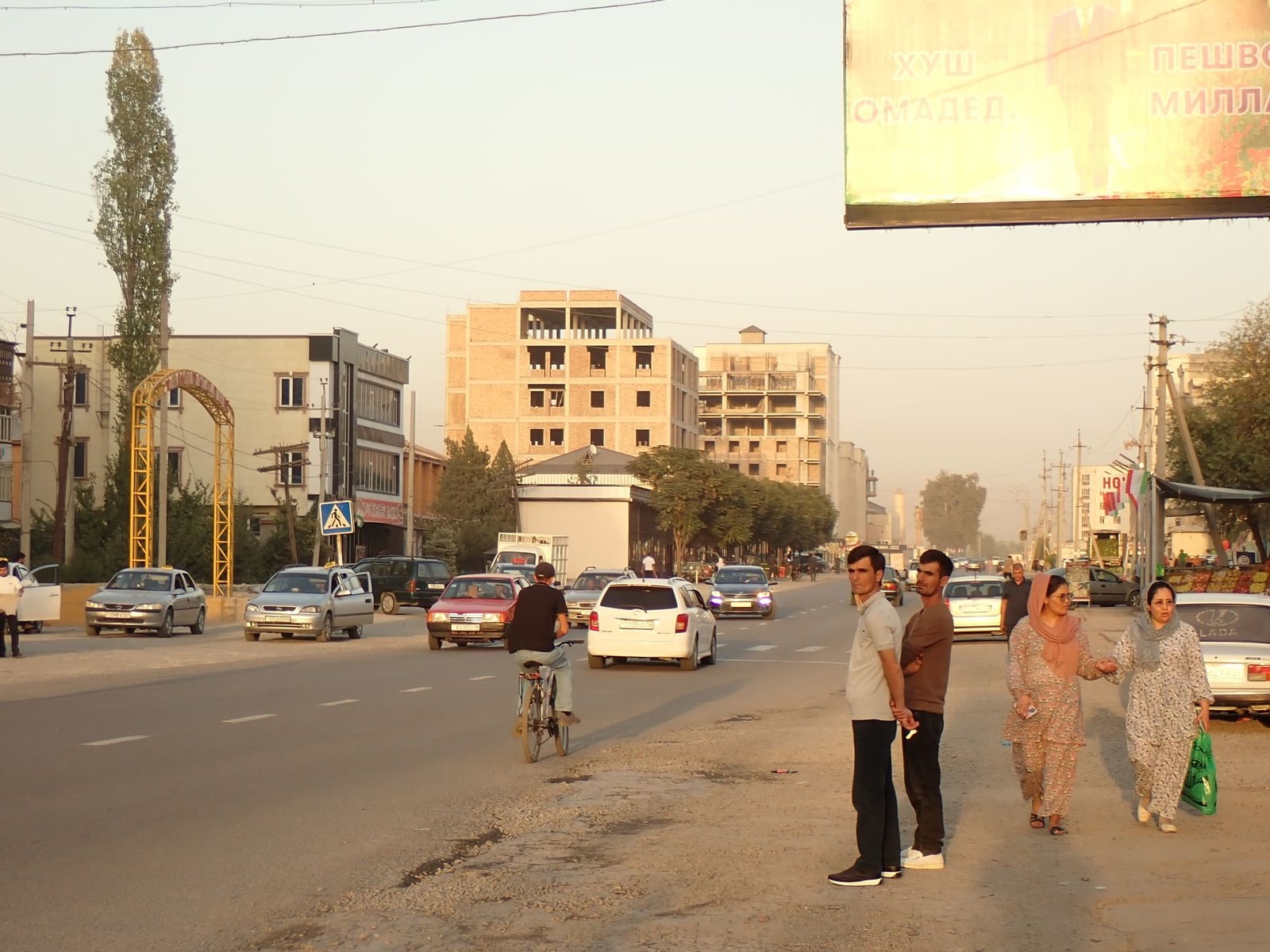
For now, back to reality. Let’s leave the foggy, heavy traffic of the capital behind.
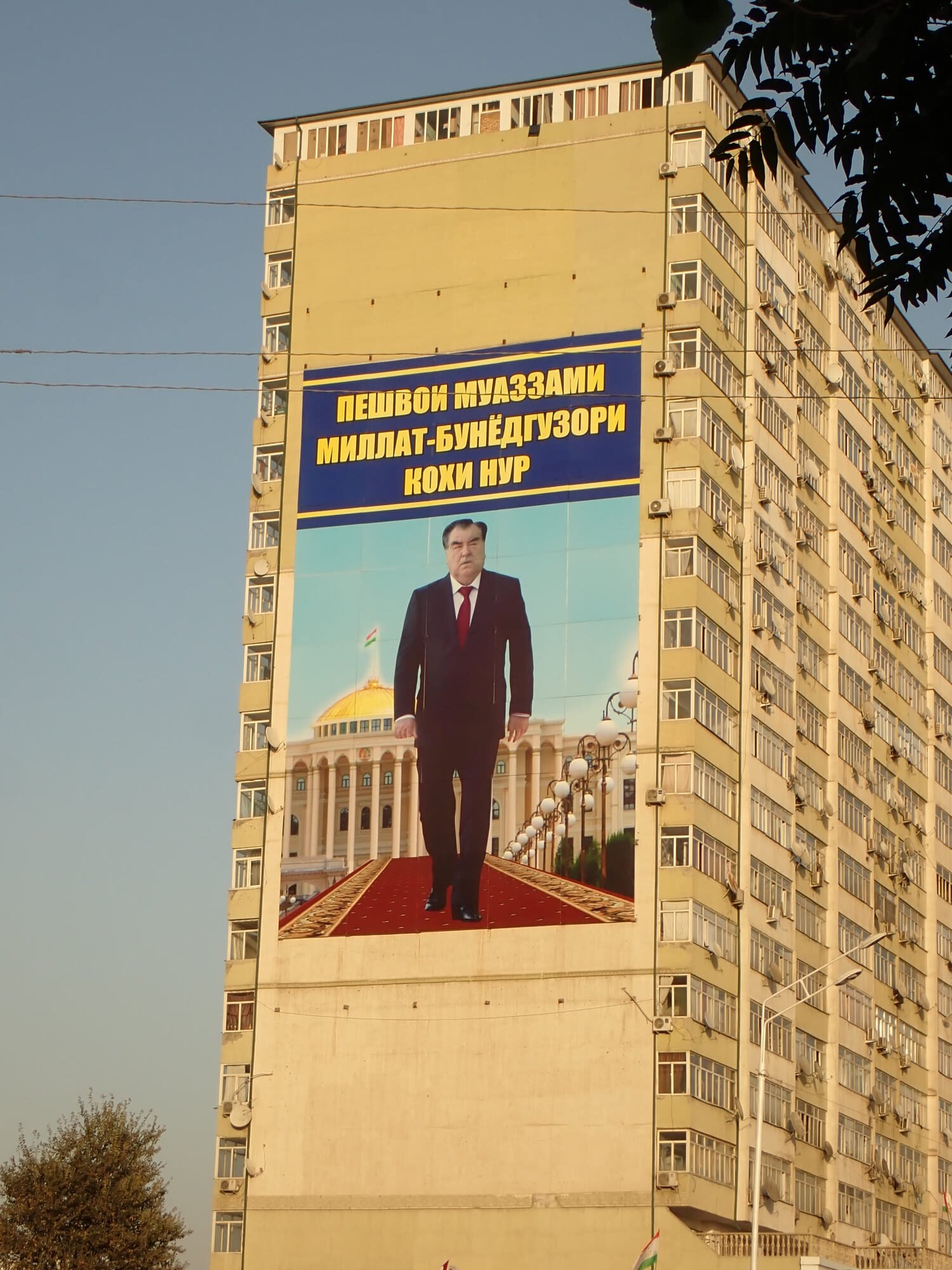
Political Leader in charge of the country for 30+ years
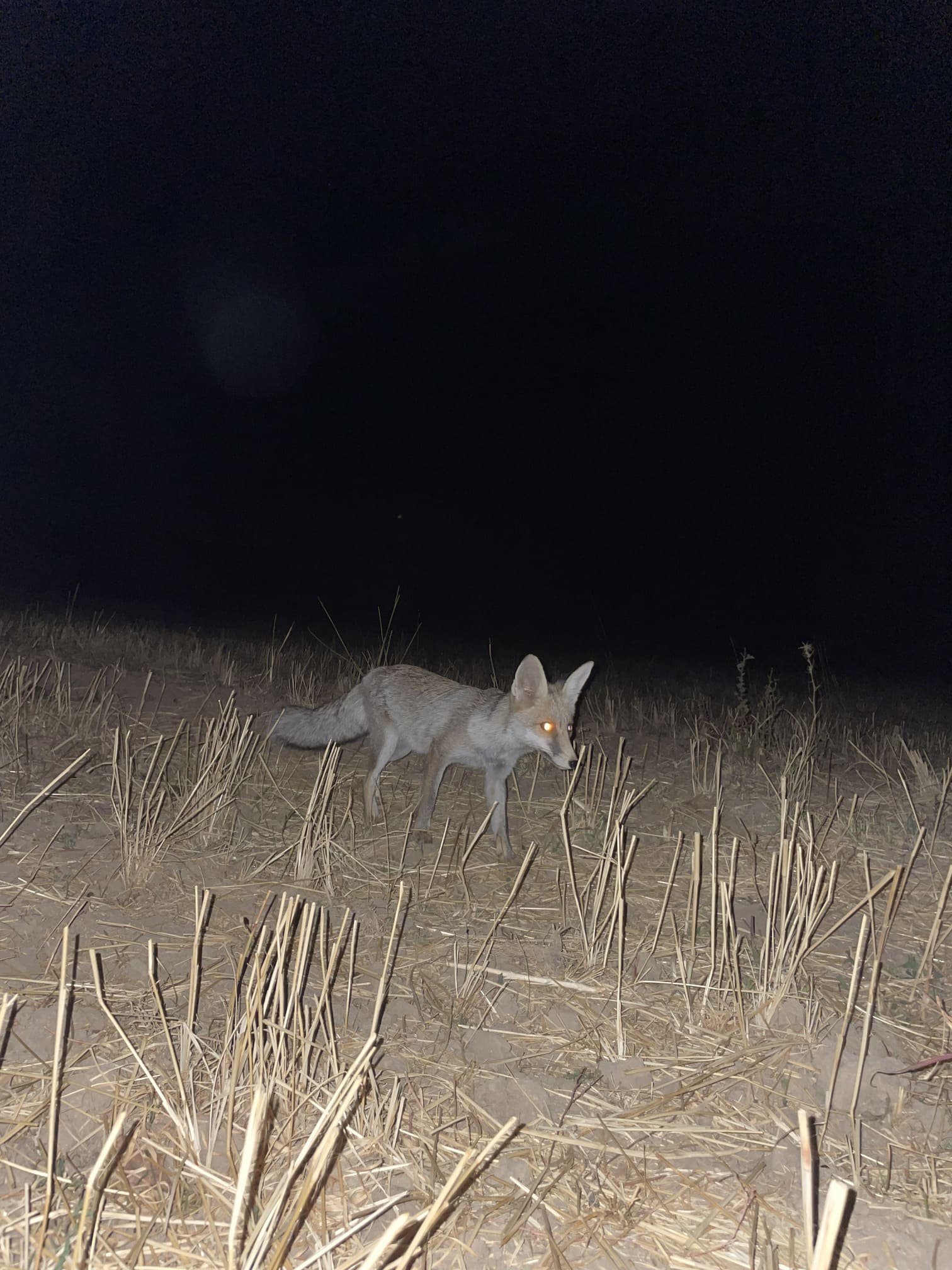
The first two days on the road are relatively easy, with decent pavement. My first night, however, will remind me to be more vigilant. Thinking I’d be safe, I decide to sleep under the stars. That was a big mistake—I spend the night alternating between sleep and chasing away a fox that keeps stealing my clothes and food. When I wake up, drinking the condensed milk that my ginger-haired nocturnal friend had recently nibbled on isn’t the brightest idea I’ve ever had. What followed was a day of anxiety, wondering if rabies would have me roasting on the Tajik highlands. Despite doctors who were convinced there was nothing to worry about, I’d end up getting three post-exposure vaccine shots over the next two weeks (likely unnecessary).
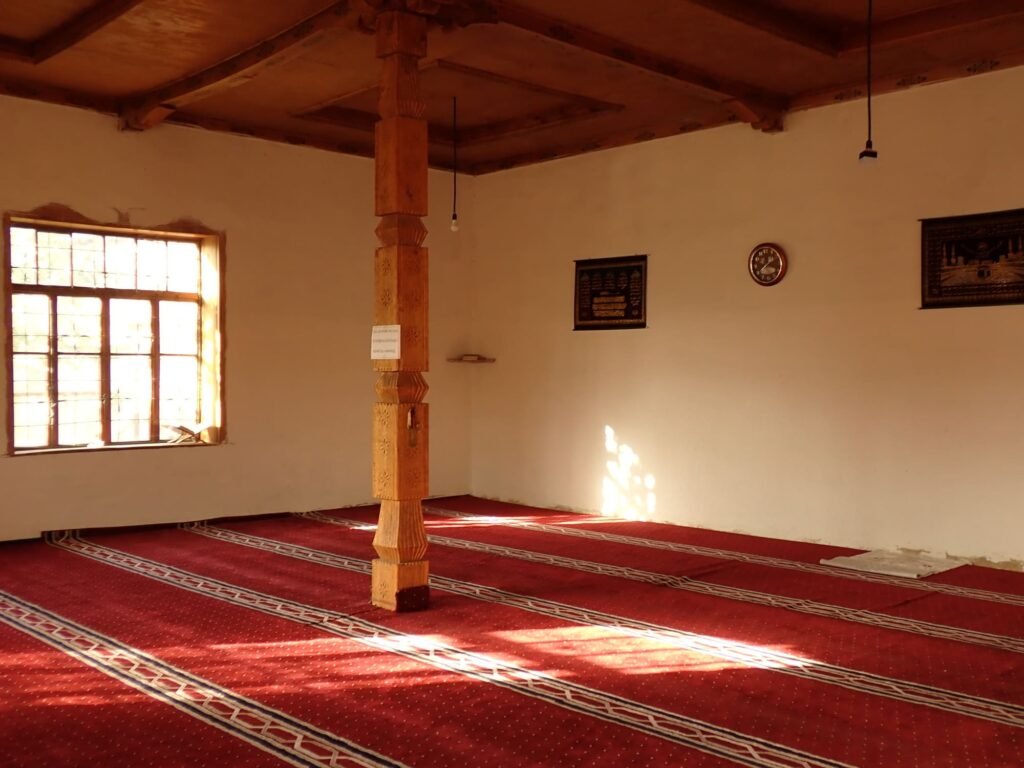
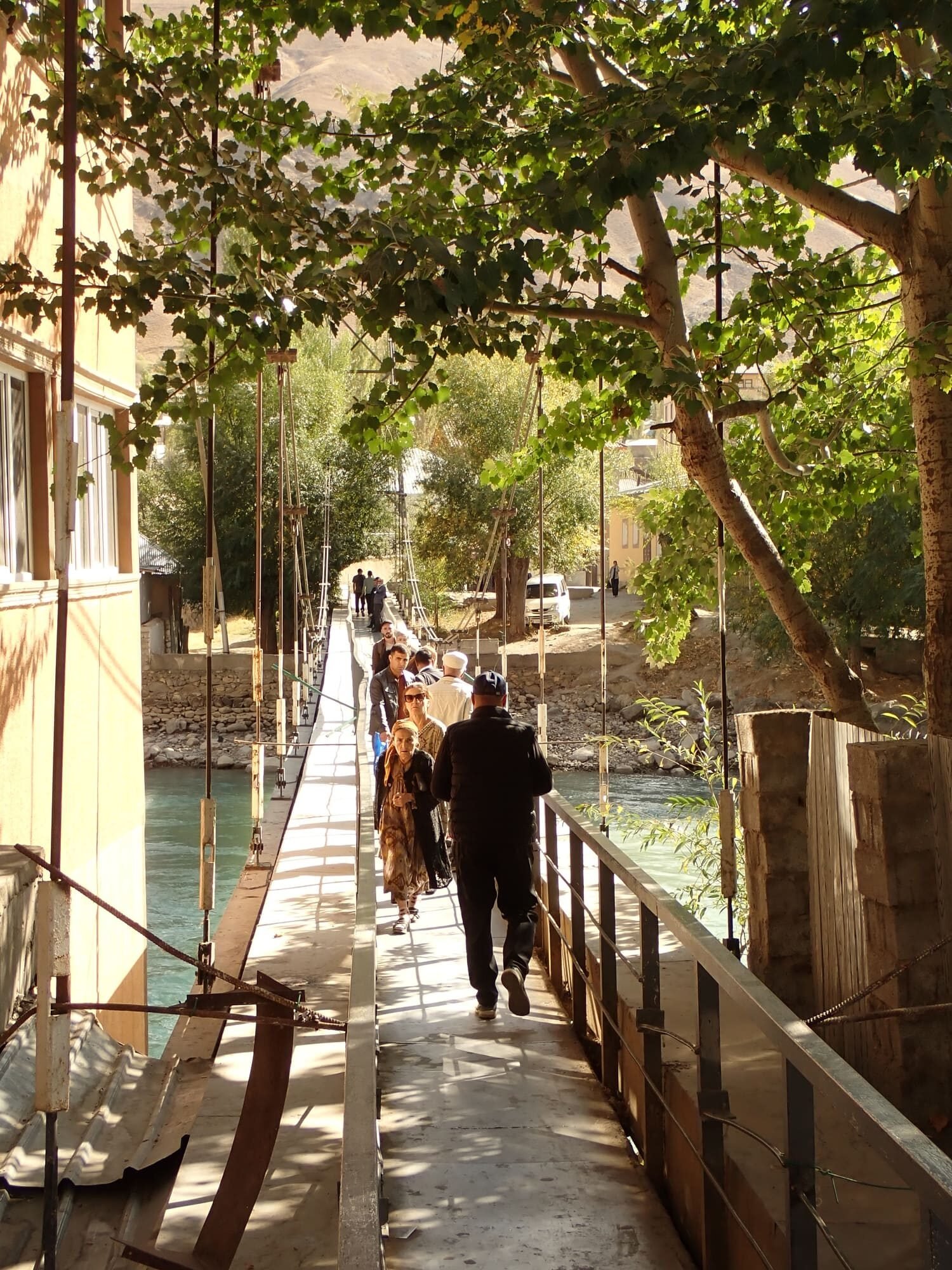
In the twilight of Obigarm, a kind soul appears before me. An imam kindly offers to let me stay at the village mosque. His thick, graying beard guides me toward this sacred place, covered with prayer rugs. What a wonderful place to set up camp for just two nights. I feel honored.
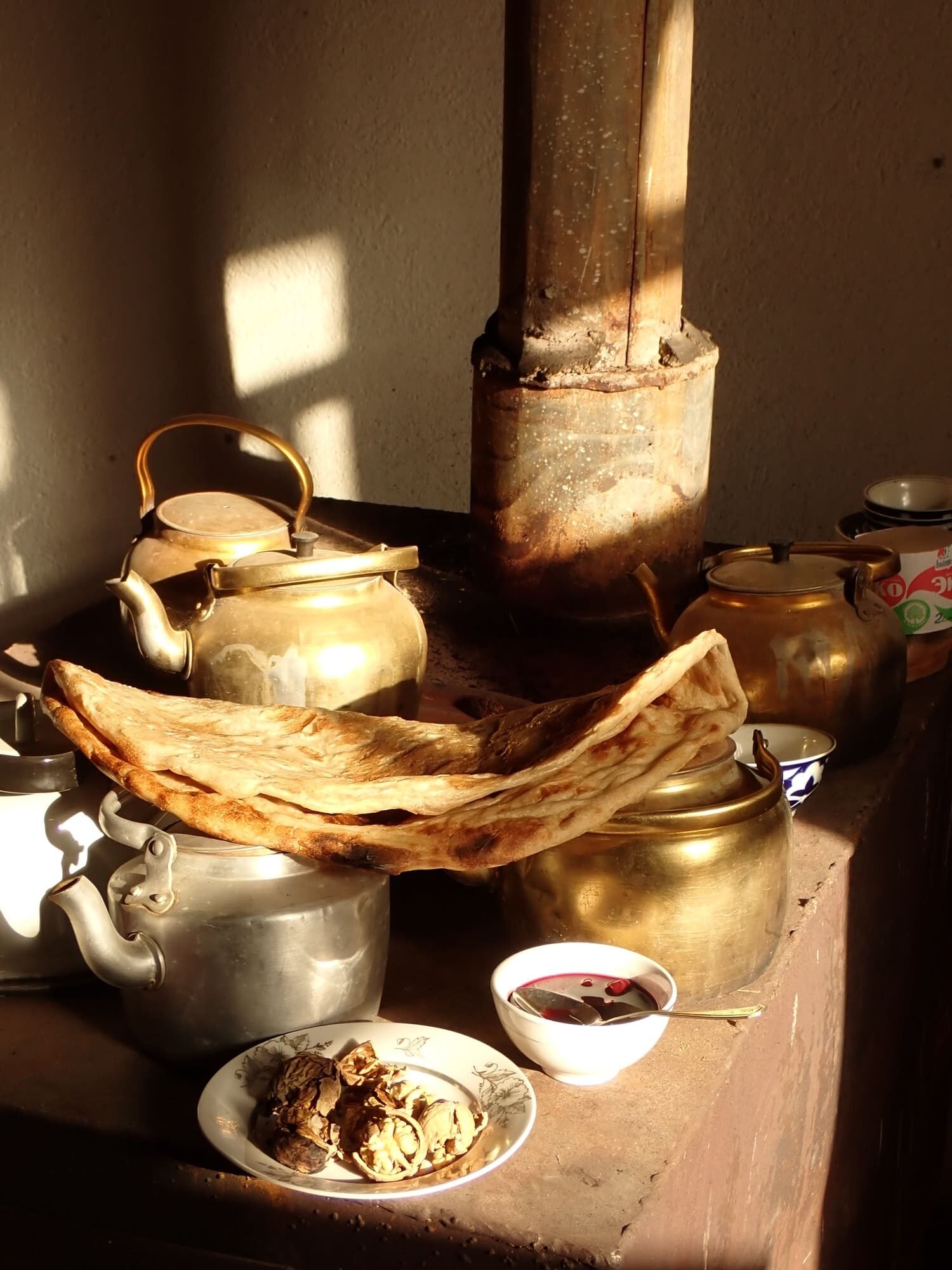
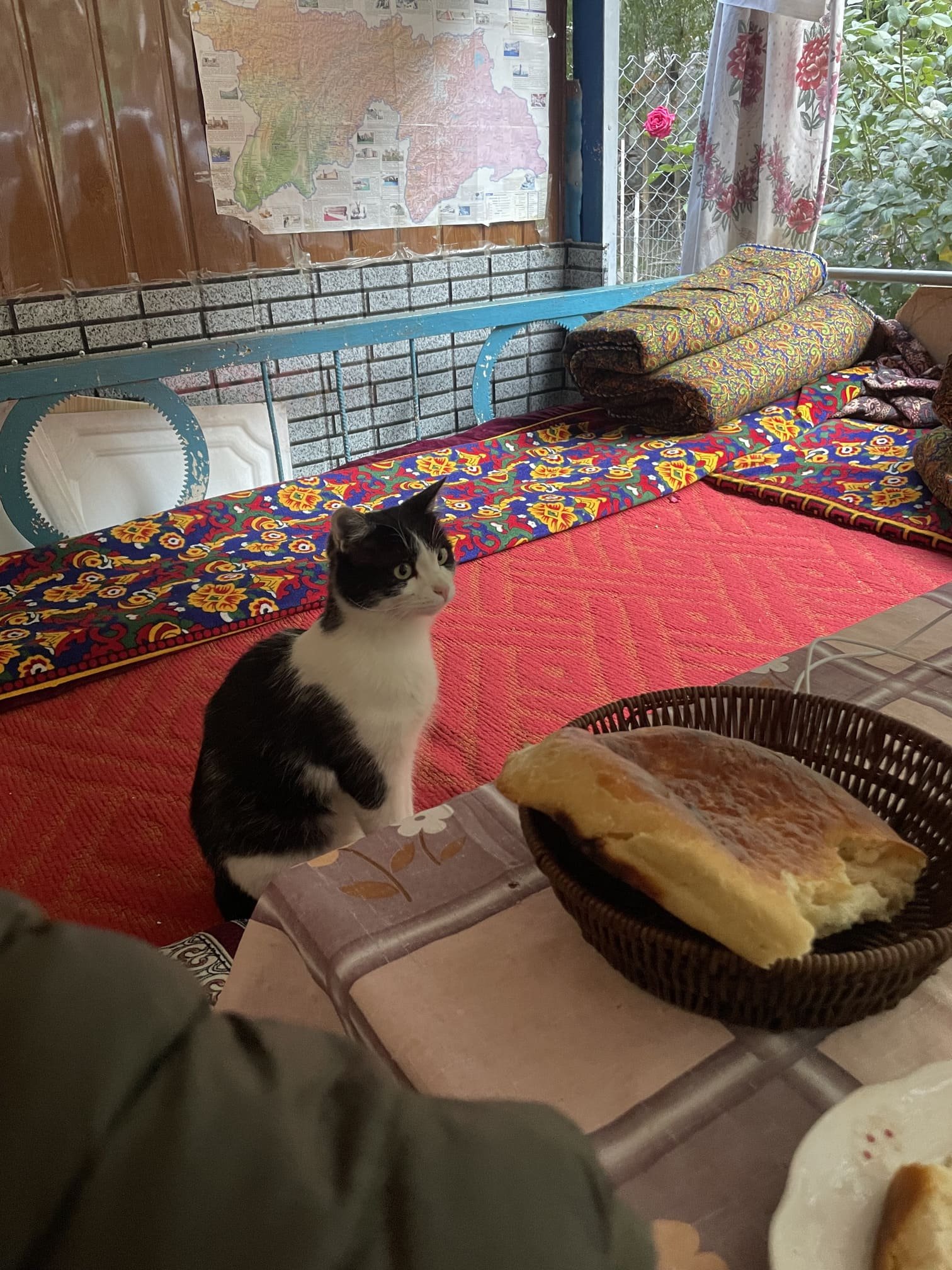
Early in the morning, a young man even brings me breakfast: naan (Central Asian sun-dried bread), nuts, and jam. I must have missed the memo about the royal treatment nomads receive in the kingdom of the Tajik people.
After so much generosity, it’s time to set off on my adventure along the chaotic roads of the Pamir.
Dushanbe – Obigarm / Distance : 90 km / Elevation : 1250 m
My ginger friend
My islamic hostel
Royal breakfast
2. To Afghanistan
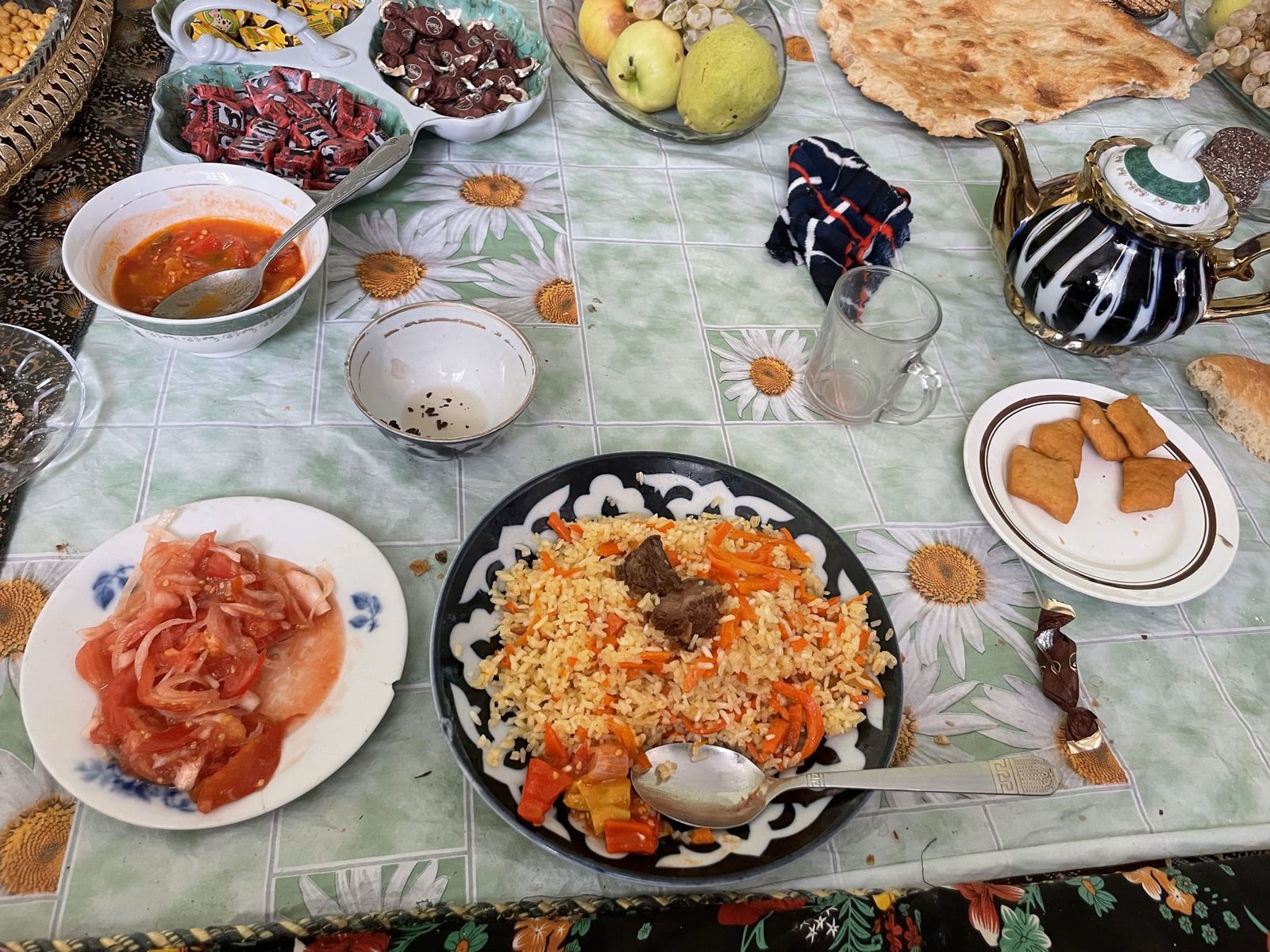
Two days later. As I’m climbing the Tavildara Pass, I’m completely immersed in Tajik village life. I’m invited to have the famous plov for lunch—rice pilaf cooked in mutton or beef fat with carrots, onions, and spices. It’s a specialty shared by many Central Asian countries, though Uzbekistan is best known for it. It’s delicious and hearty.
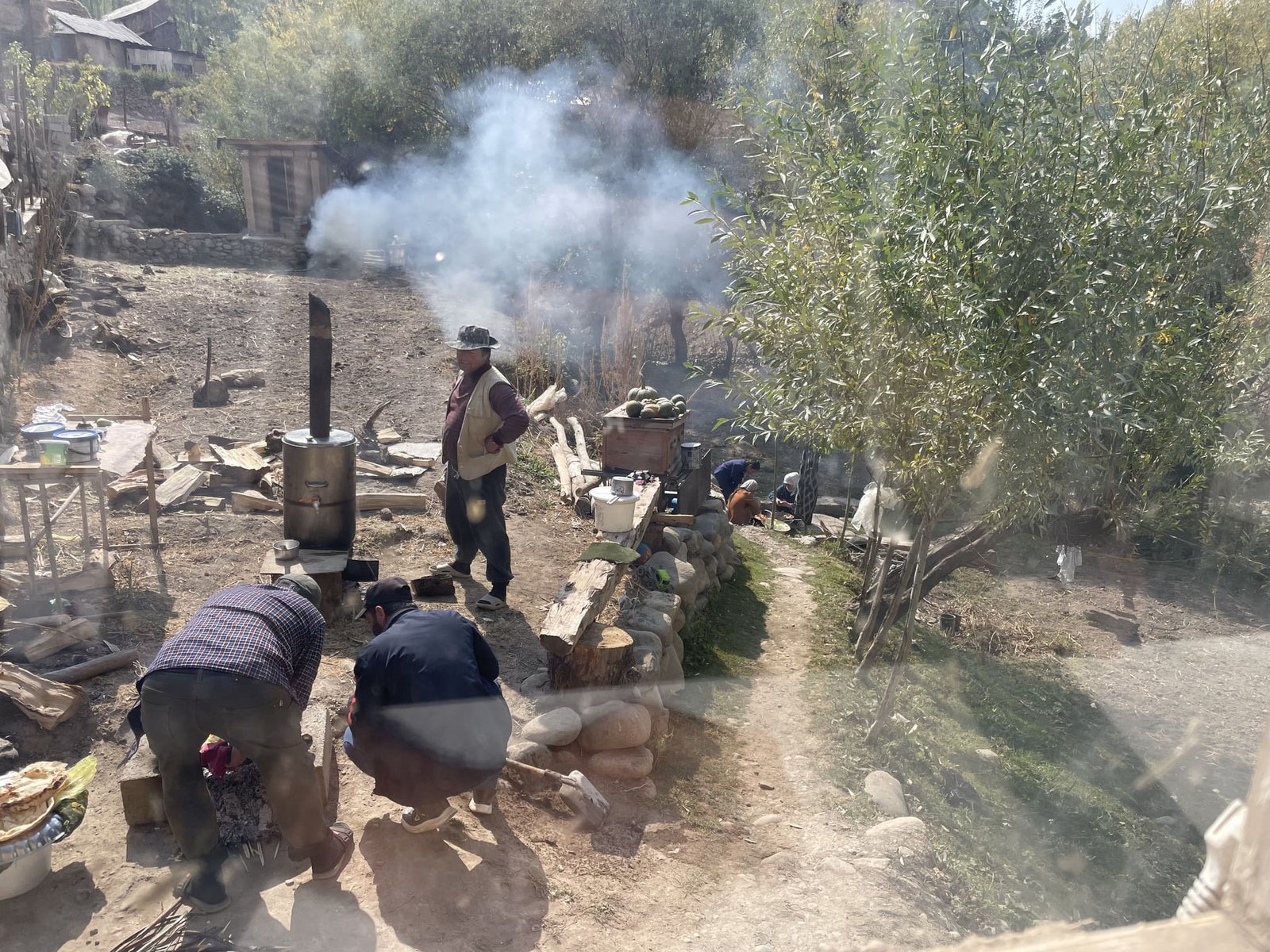
Life is simple around here, and everyone is bustling about preparing the meal. The men gather around the kazan (a sort of giant Central Asian wok) to cook. The women are busy chopping vegetables and serving the food. The imam even comes to lead a prayer before everyone starts to eat. This house is the village inn. During the two hours I was there, at least a dozen guests came and went to enjoy the food.
The warmth and the wonderful Tajik village community continue to spoil me. Far from the city, their lives seem more governed by Islam, despite a state that advocates a form of secularism inherited from the Soviet era.
Tadjik Plov
Men cooking, women chopping veggies
As I pass through the villages, I see numerous piles of dried cow dung stored outside the homes. They’re a real source of energy in these remote areas—an essential fuel for heating and cooking when forests are scarce. Hot water tanks aren’t coming anytime soon.
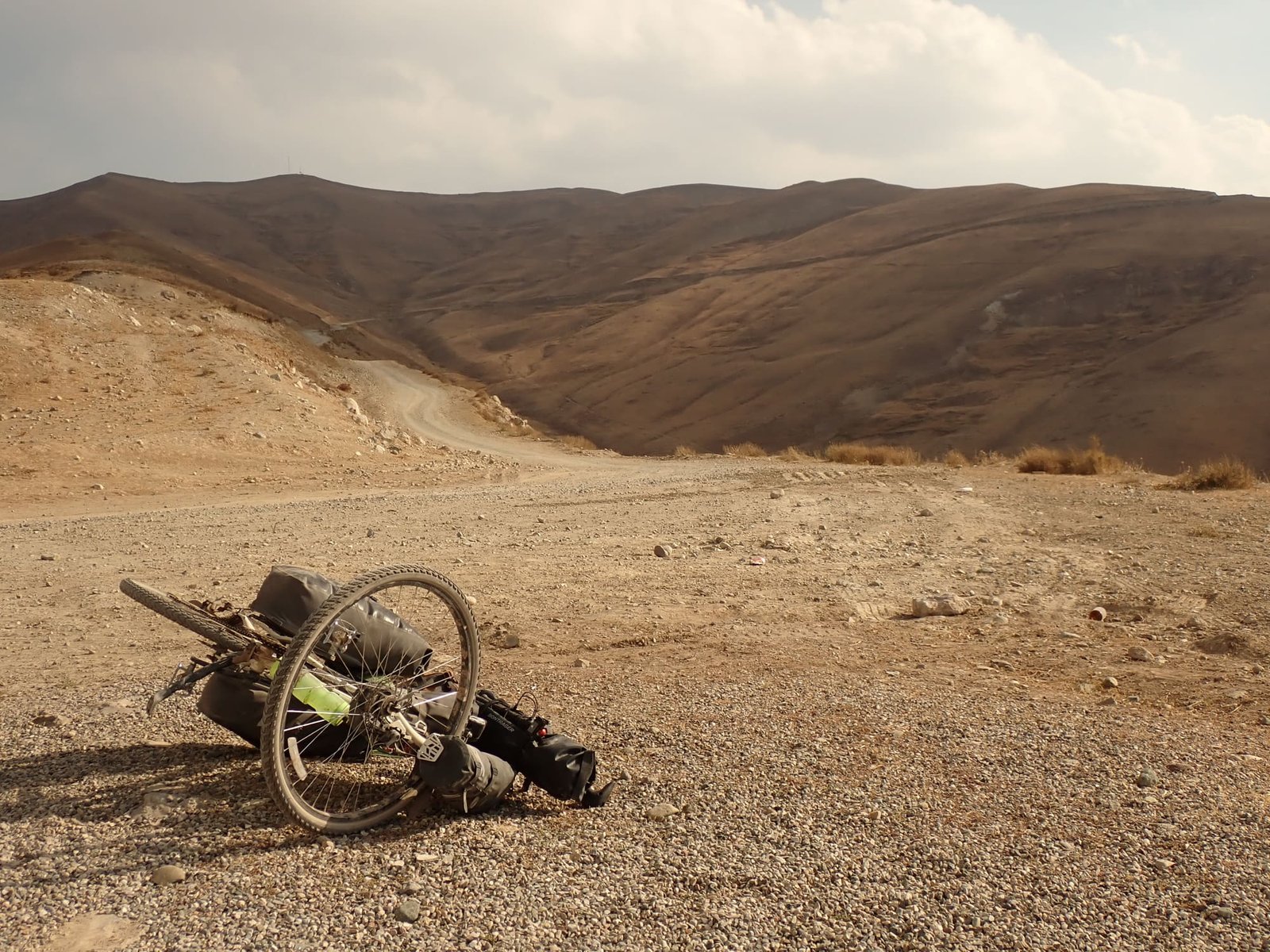
The rest of my day will consist of cursing under my breath at how hard it’s going to be to make headway over this pass. “F***,” “f*** your m***,” and other colorful expletives fly from my mouth. It’s an outlet, offering the hope of easing the pain in my buttocks, which has been taking a beating over the last two days of rocky trails and steep climbs.
The summit seems so close; it’s easily visible against this arid landscape, worn smooth by millennia. Yet I wouldn’t reach it until the end of the day, treating myself to a nice break in the midst of a relentless blizzard.
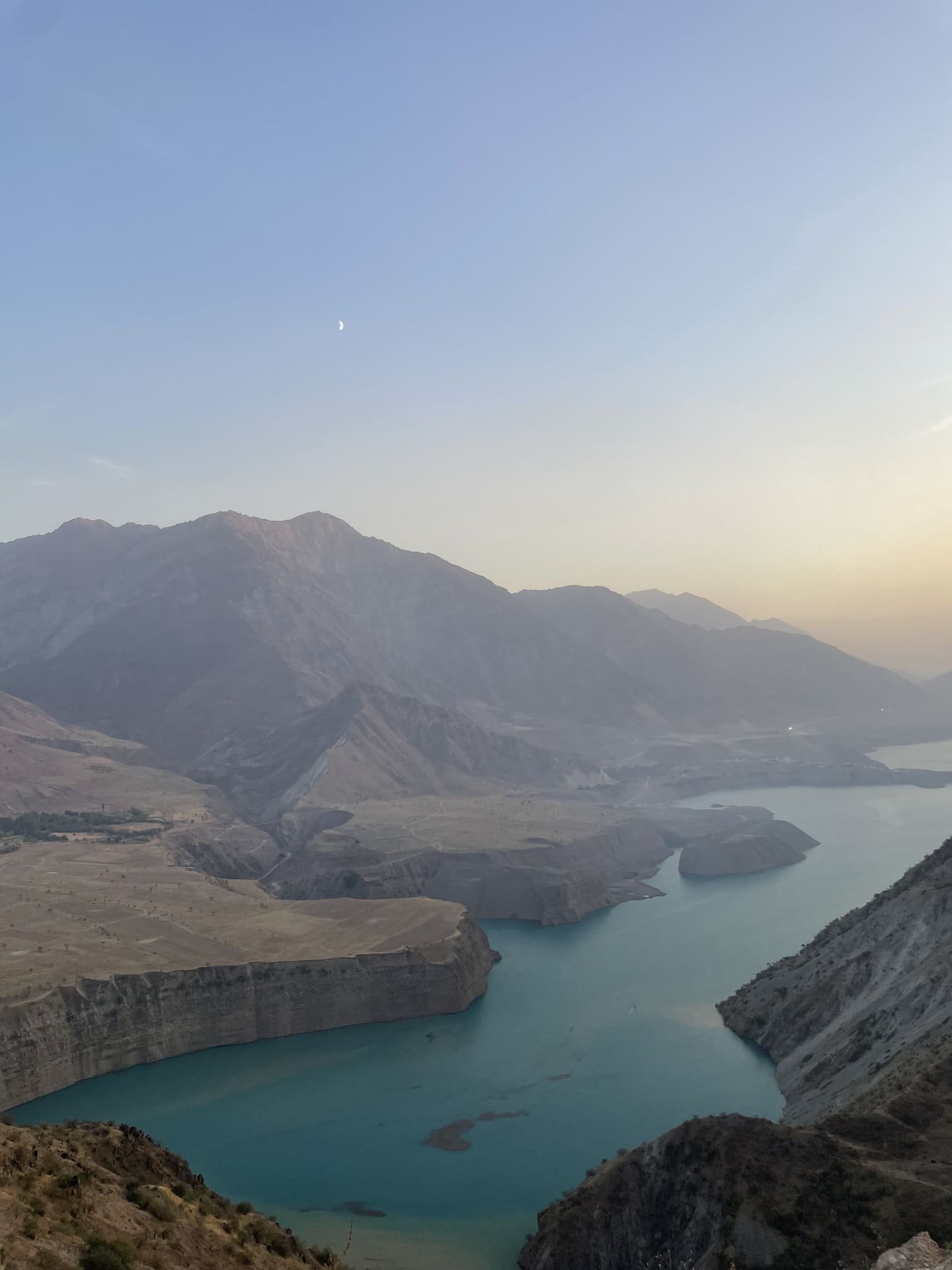
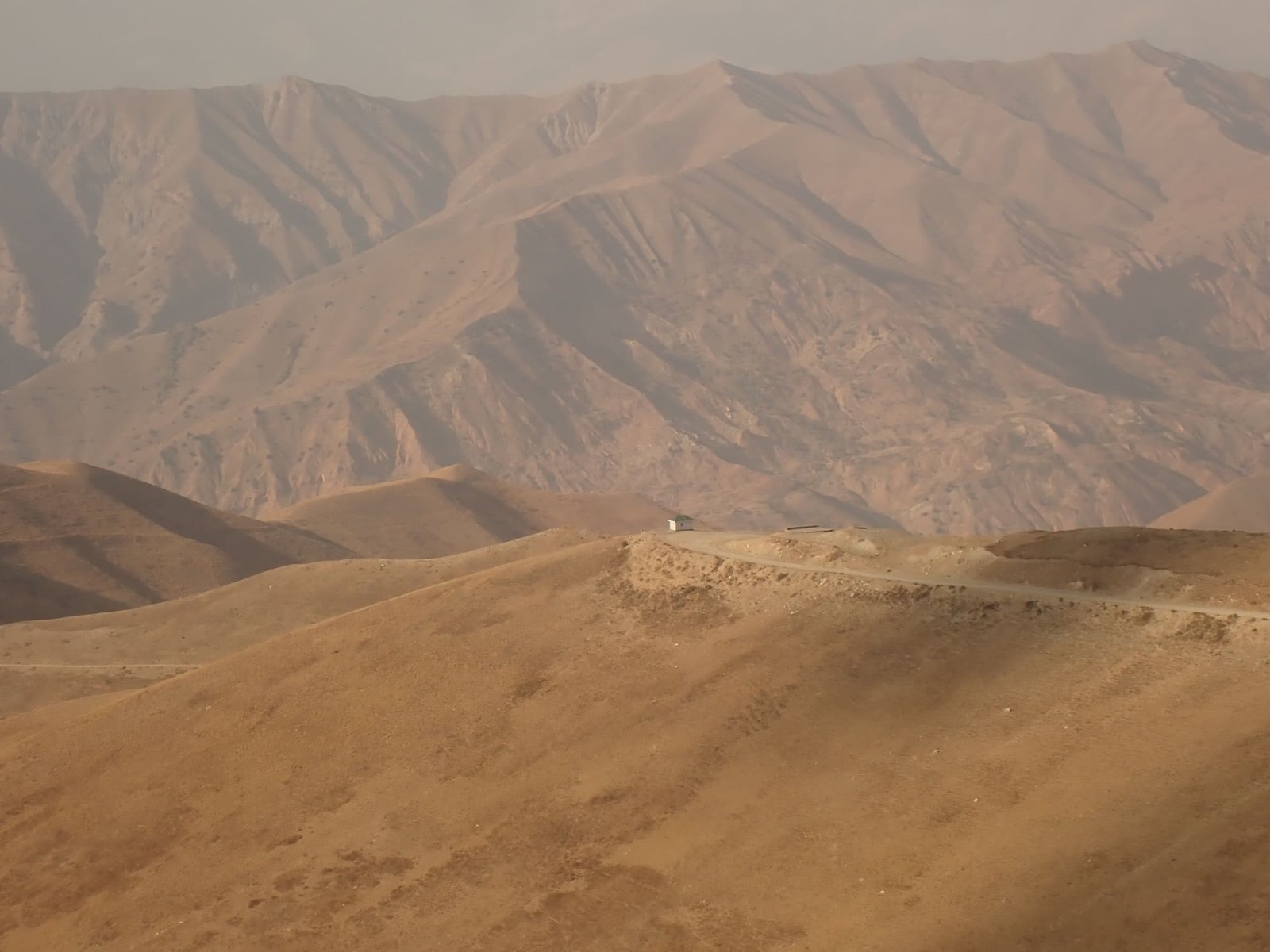
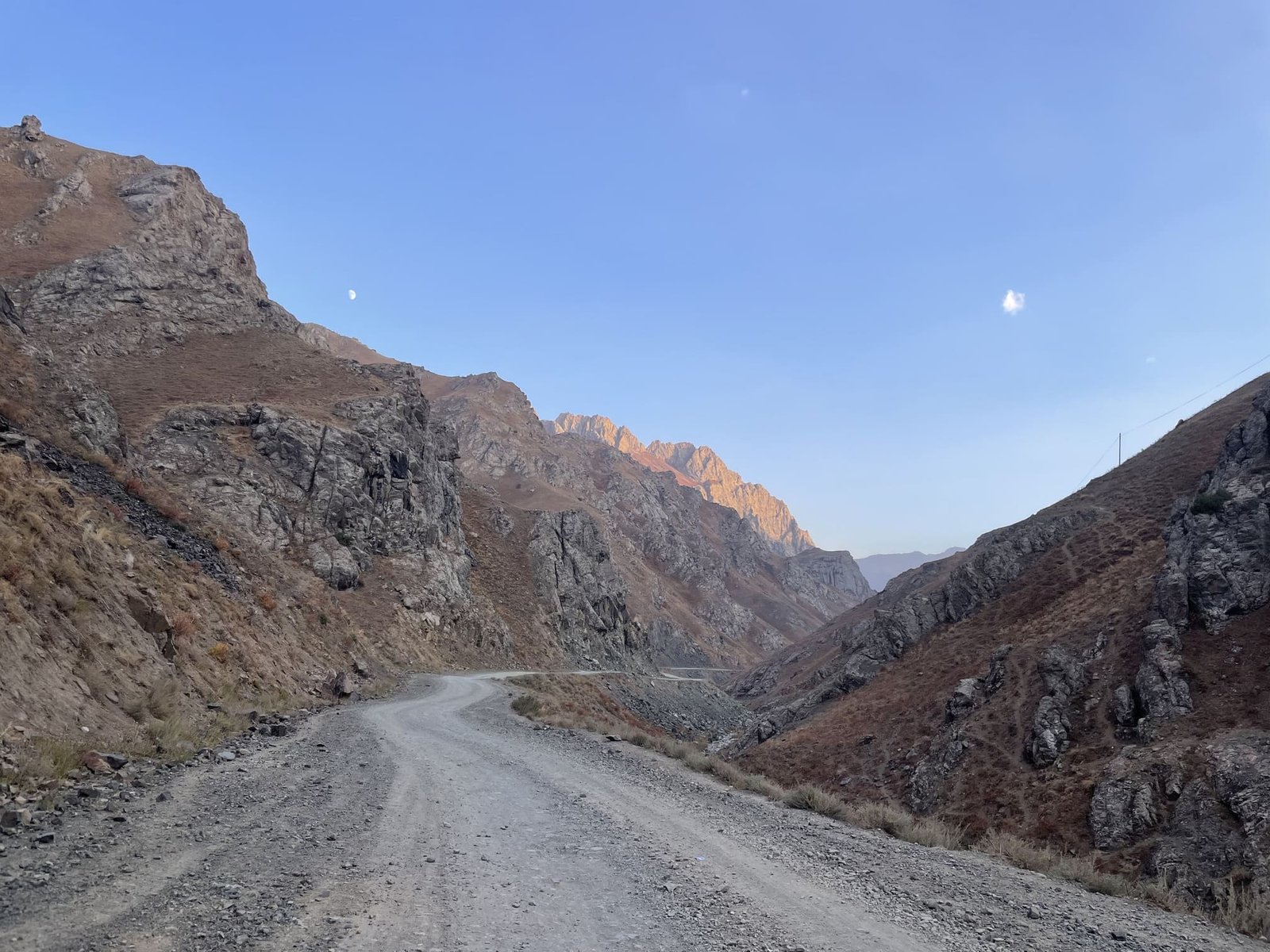
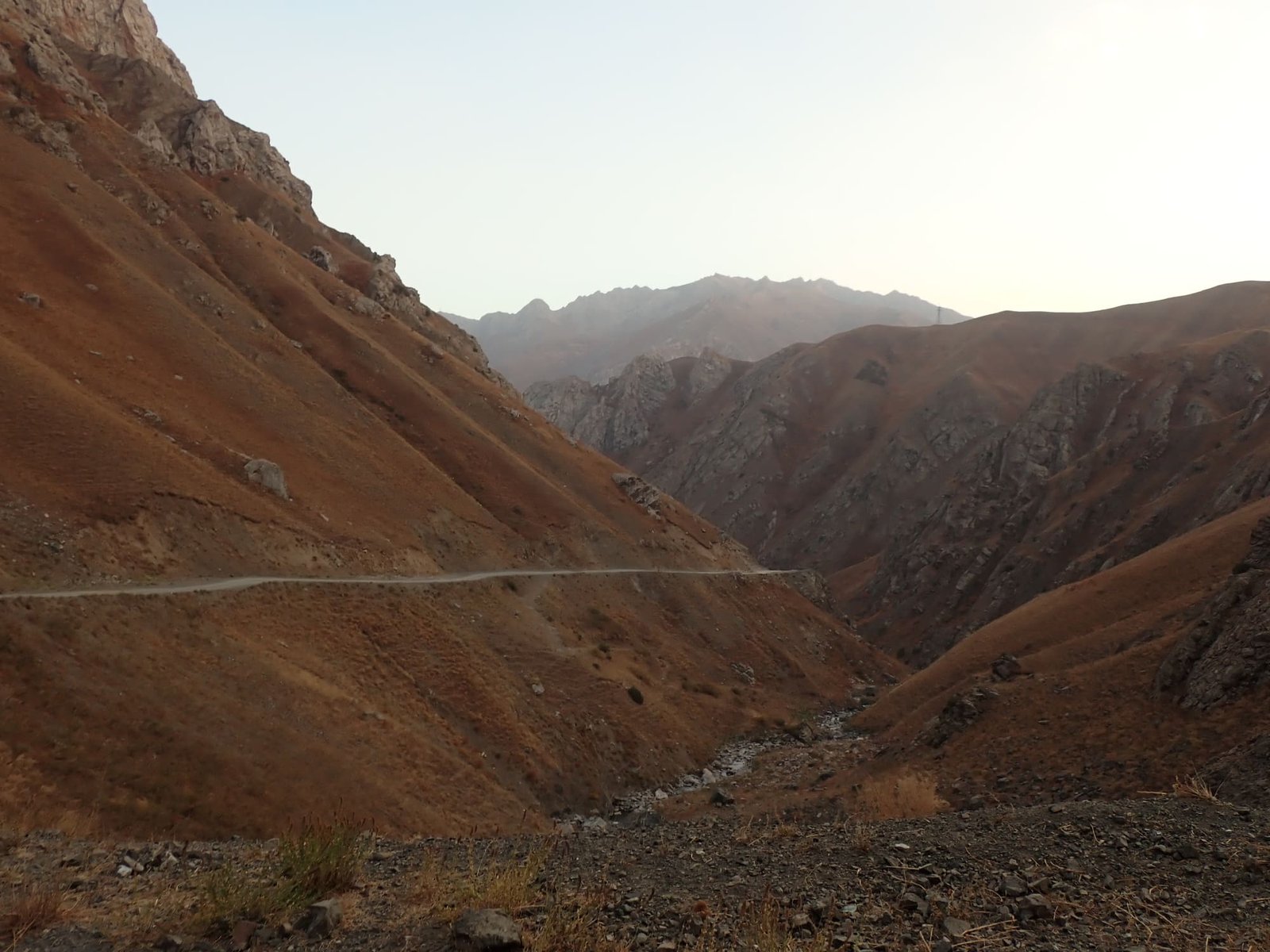
As if to reward me for a day of hardship, the Pamir Highway delivers its first blow. The moon, acting as the guardian of twilight, illuminates a winding and splendid descent. From hairpin turns to rocky scree and through ravines, the spirit of the explorer takes hold of me. The “road” to the north was well worth the curses…
Obigarm – Tavildara Pass / Distance : 170 km / Elevation : 3870 m
3. Panj
On the left Tadjikistan — On the right Afghanistan
3rd October 2025 10:00 – Qalai Khumb
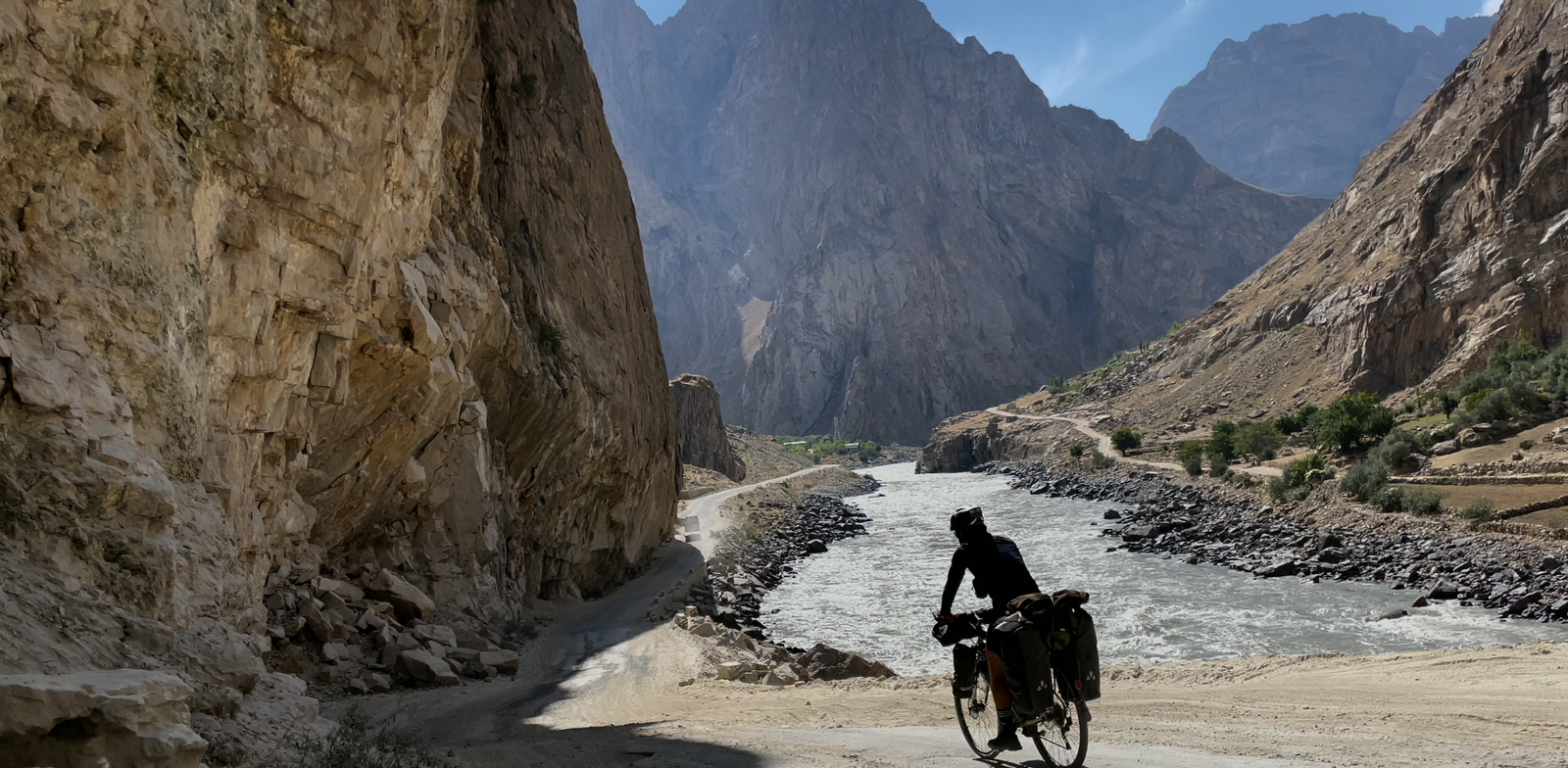
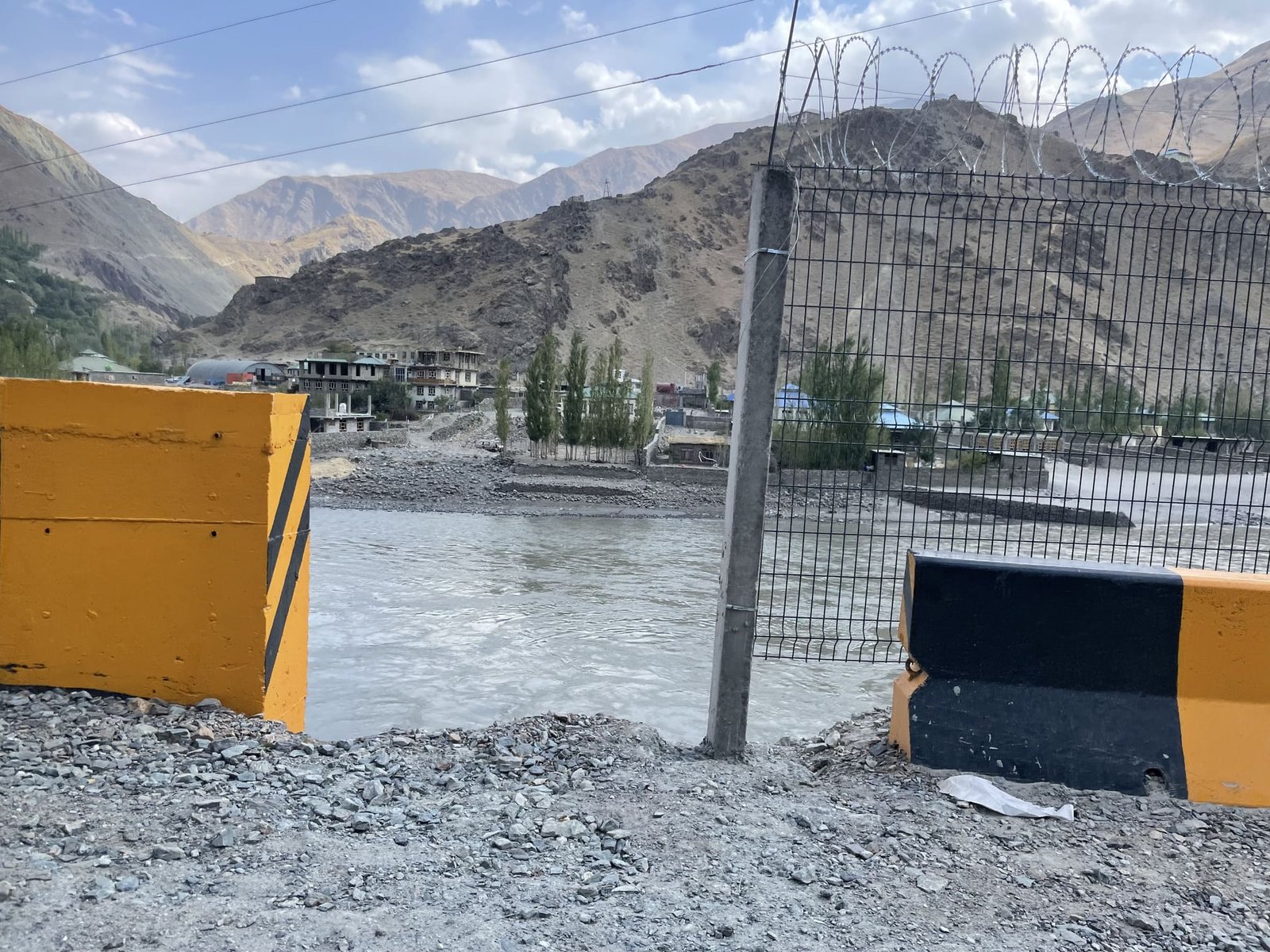
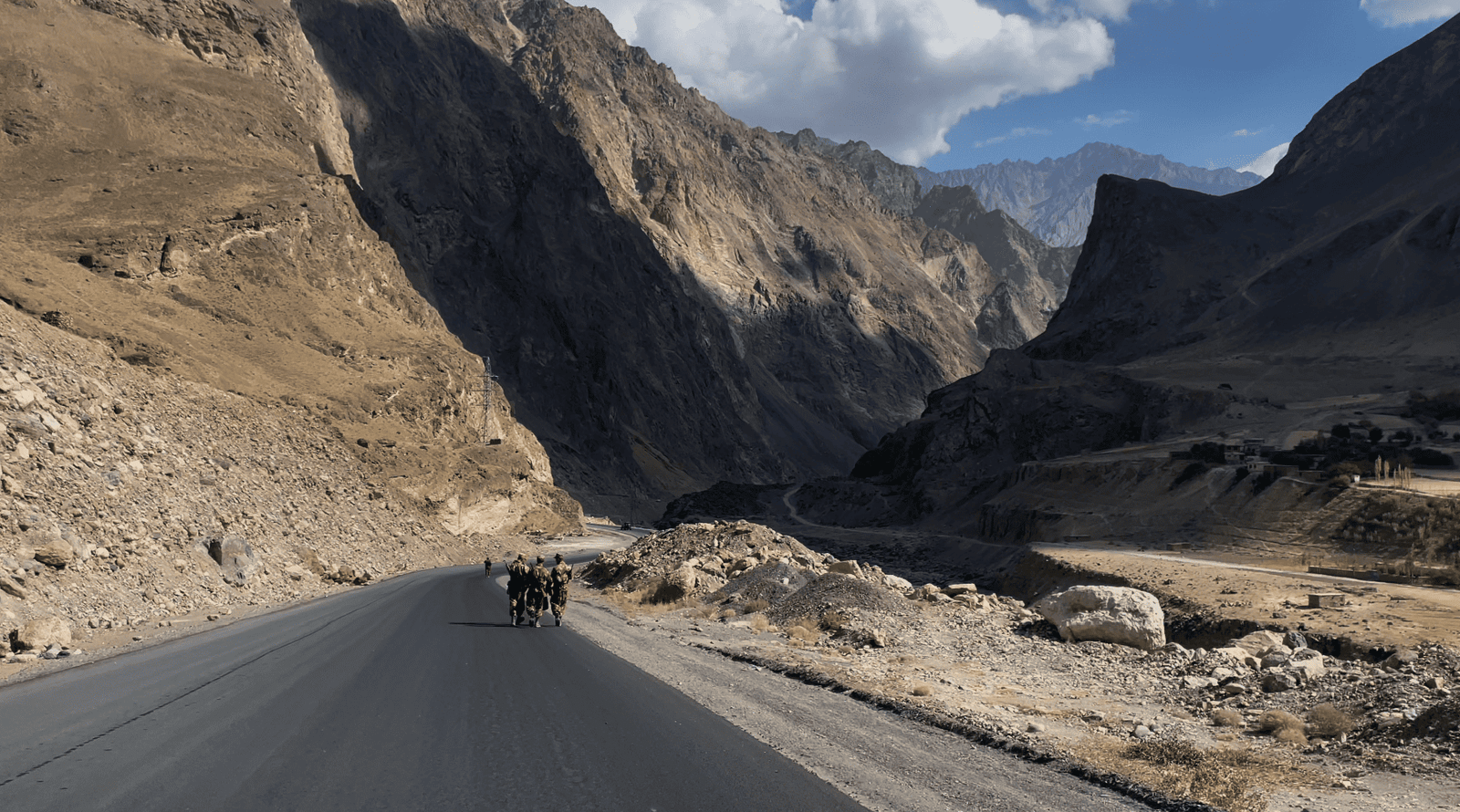
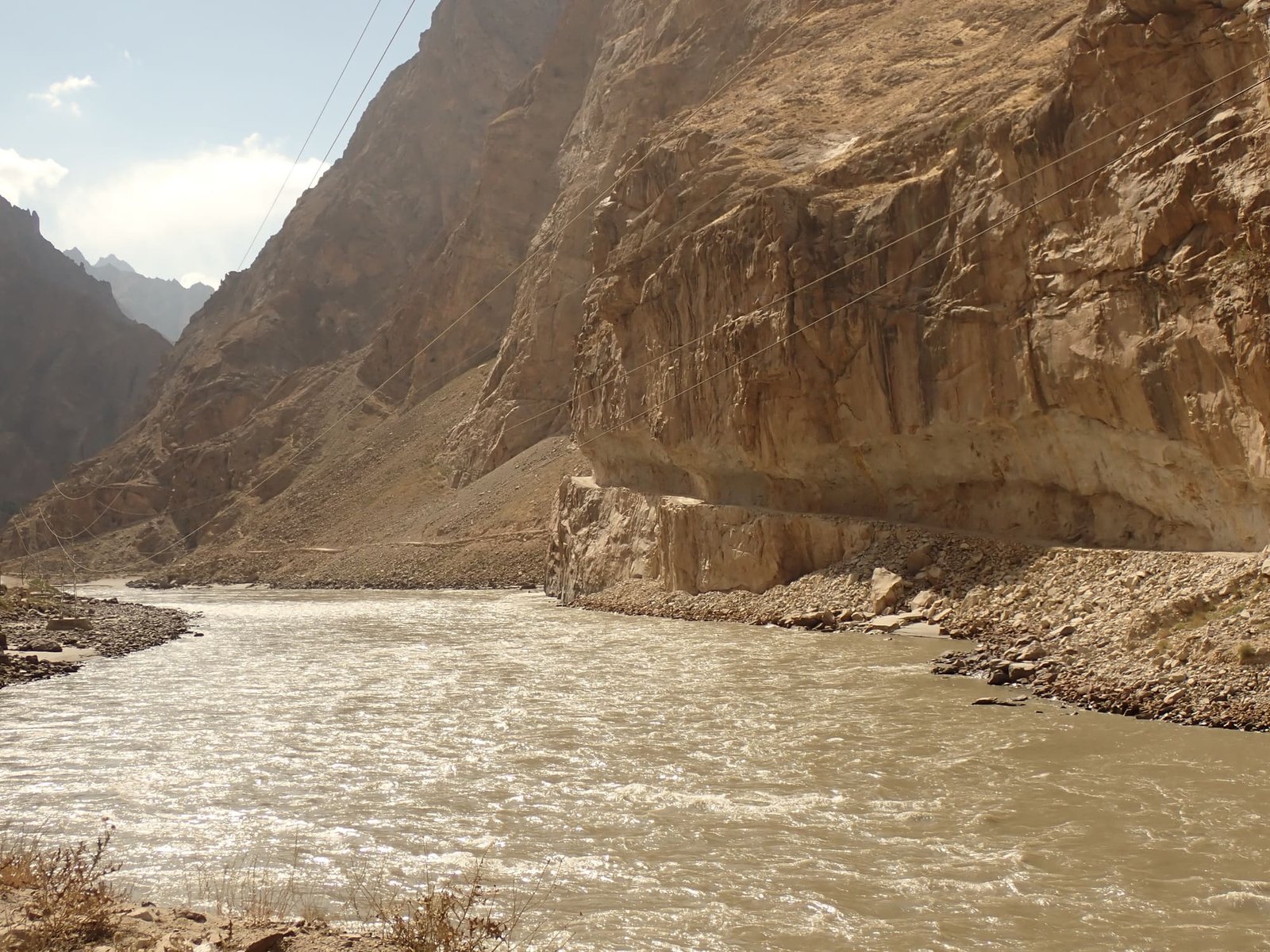
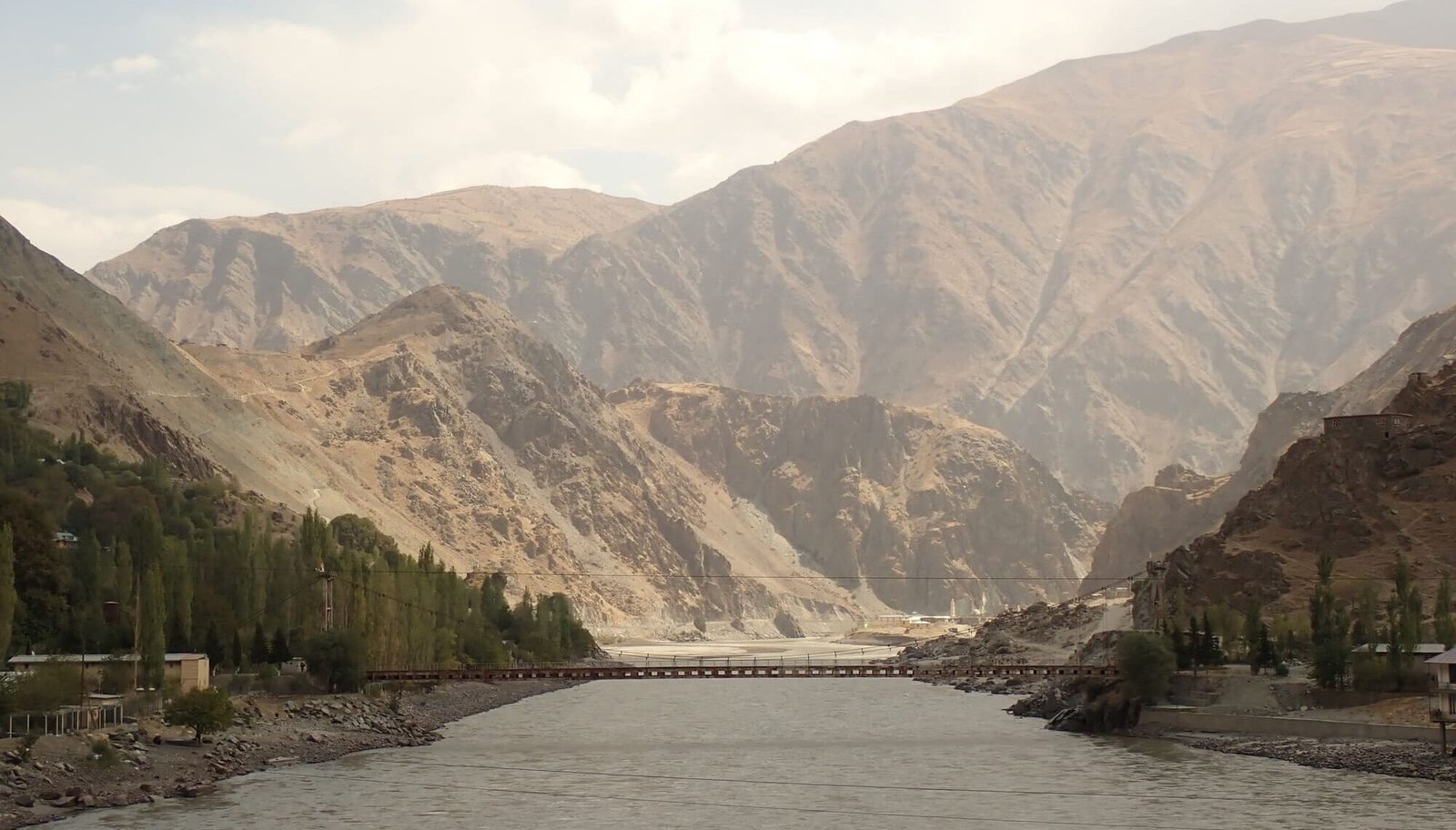
This river, more than a thousand kilometers long, forms the border between Afghanistan and Tajikistan. It is a natural border that is heavily guarded—at least around Qalai Khumb, my gateway to Afghanistan. Barriers and barbed wire serve as ramparts for the border guards patrolling along this road.
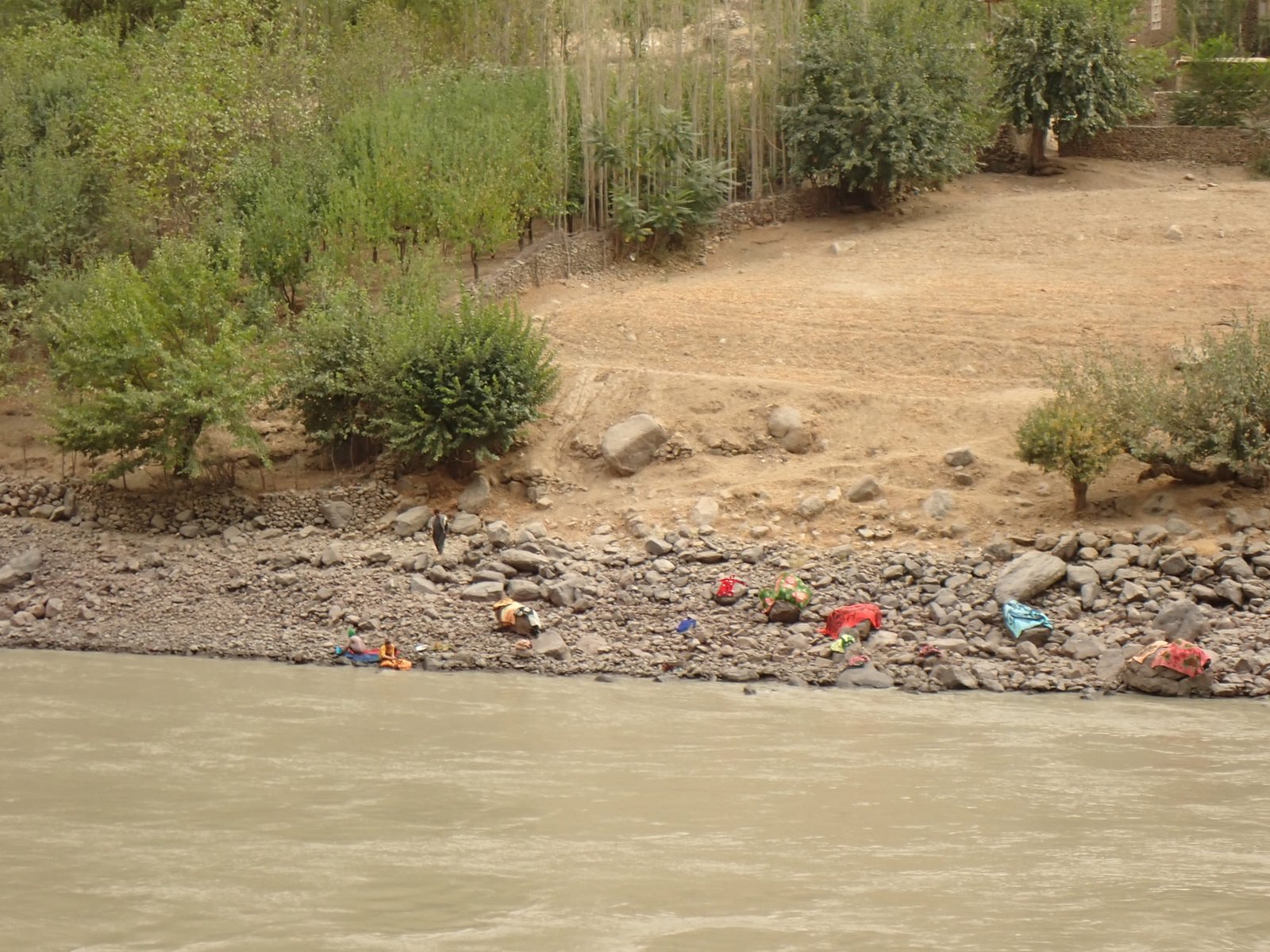
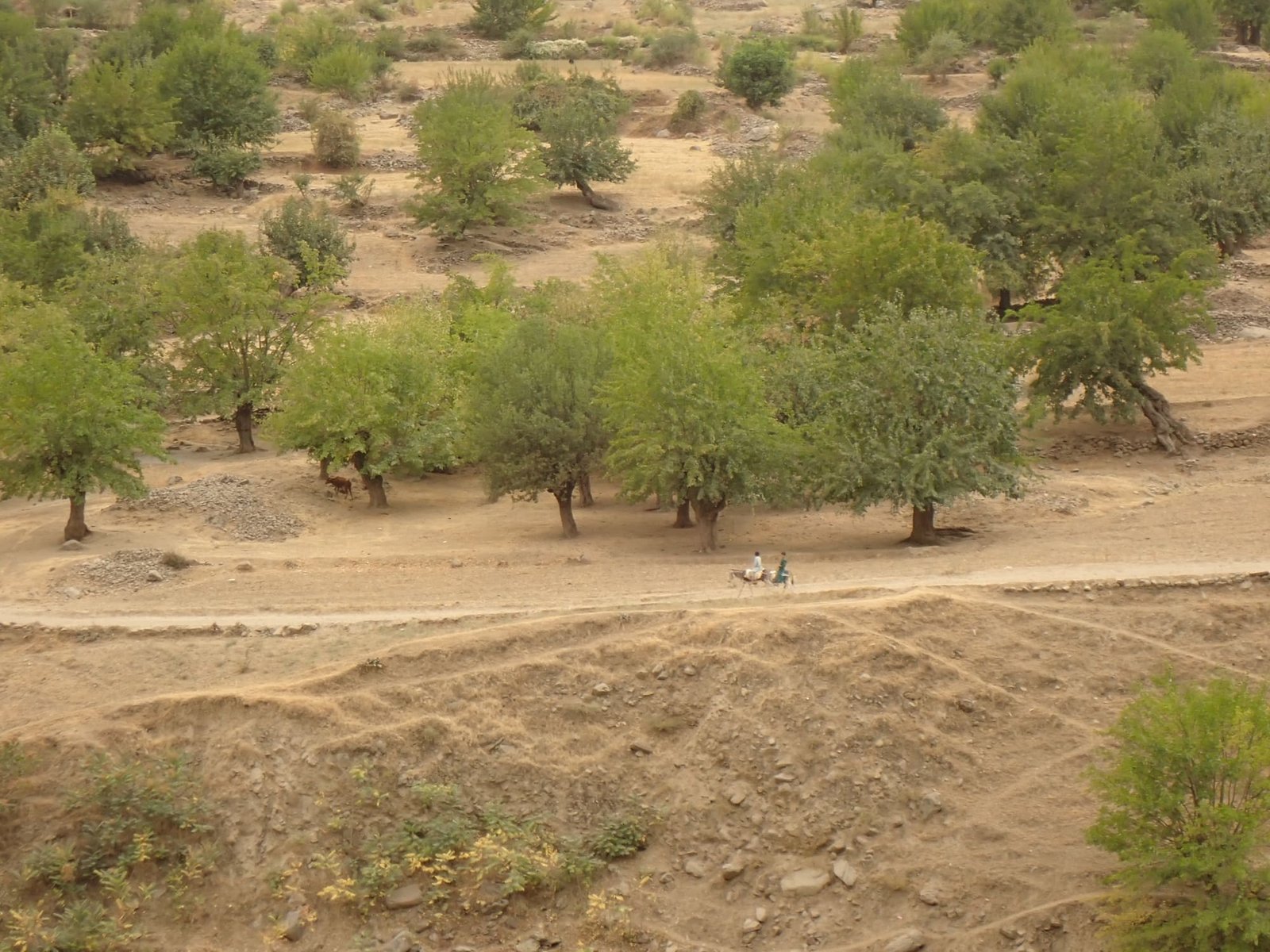
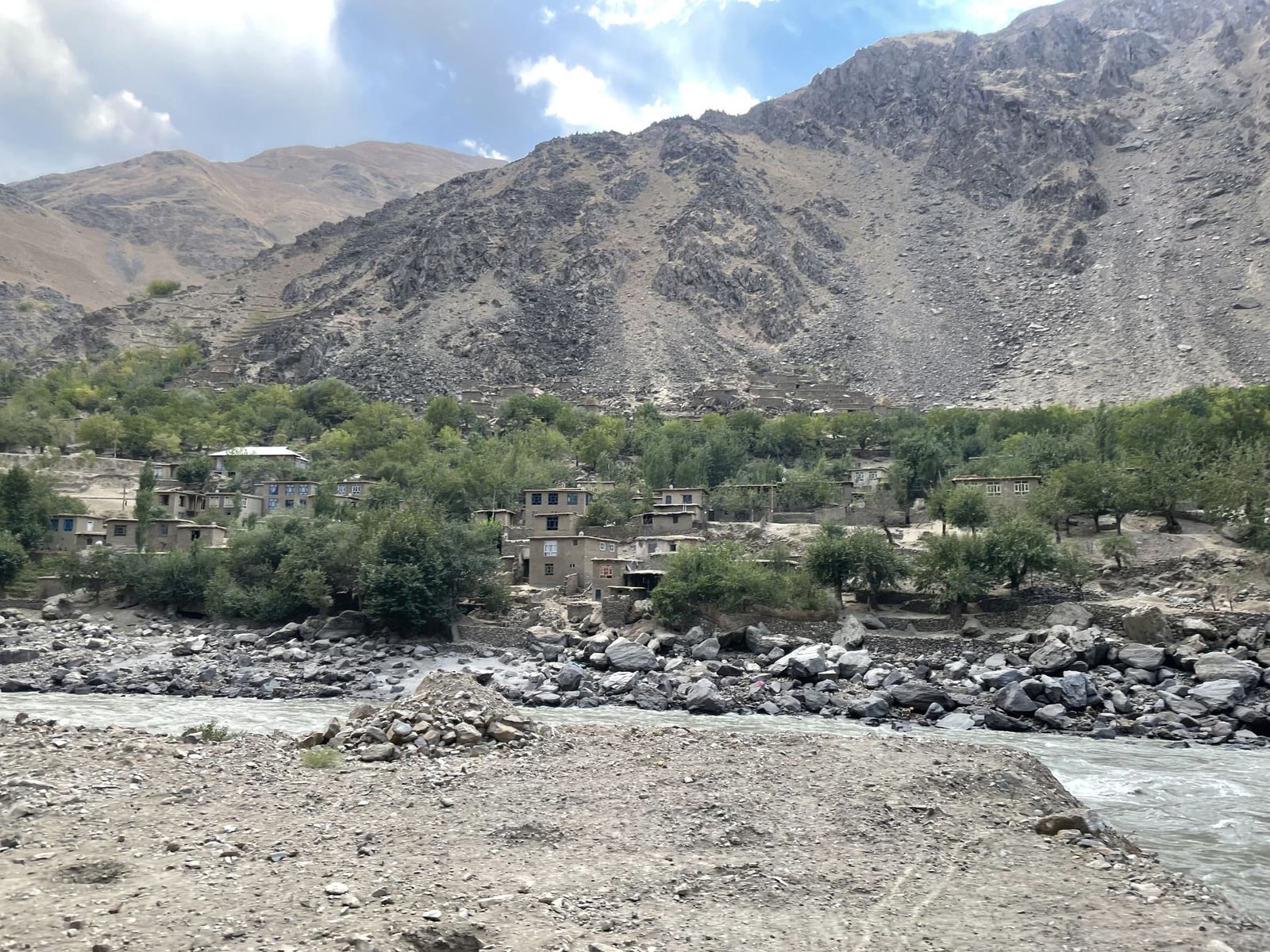
At first glance, everything seems normal on the opposite bank, about a hundred meters away from me. Over the course of a few kilometers, I observe Afghan life. Children play soccer or hide-and-seek; women do laundry on the riverbank; men get around on motorcycles, bicycles, in cars, or on donkeys. The young people even wave at me. I feel privileged to catch a glimpse, across the river, of people living in a completely different world from my own.
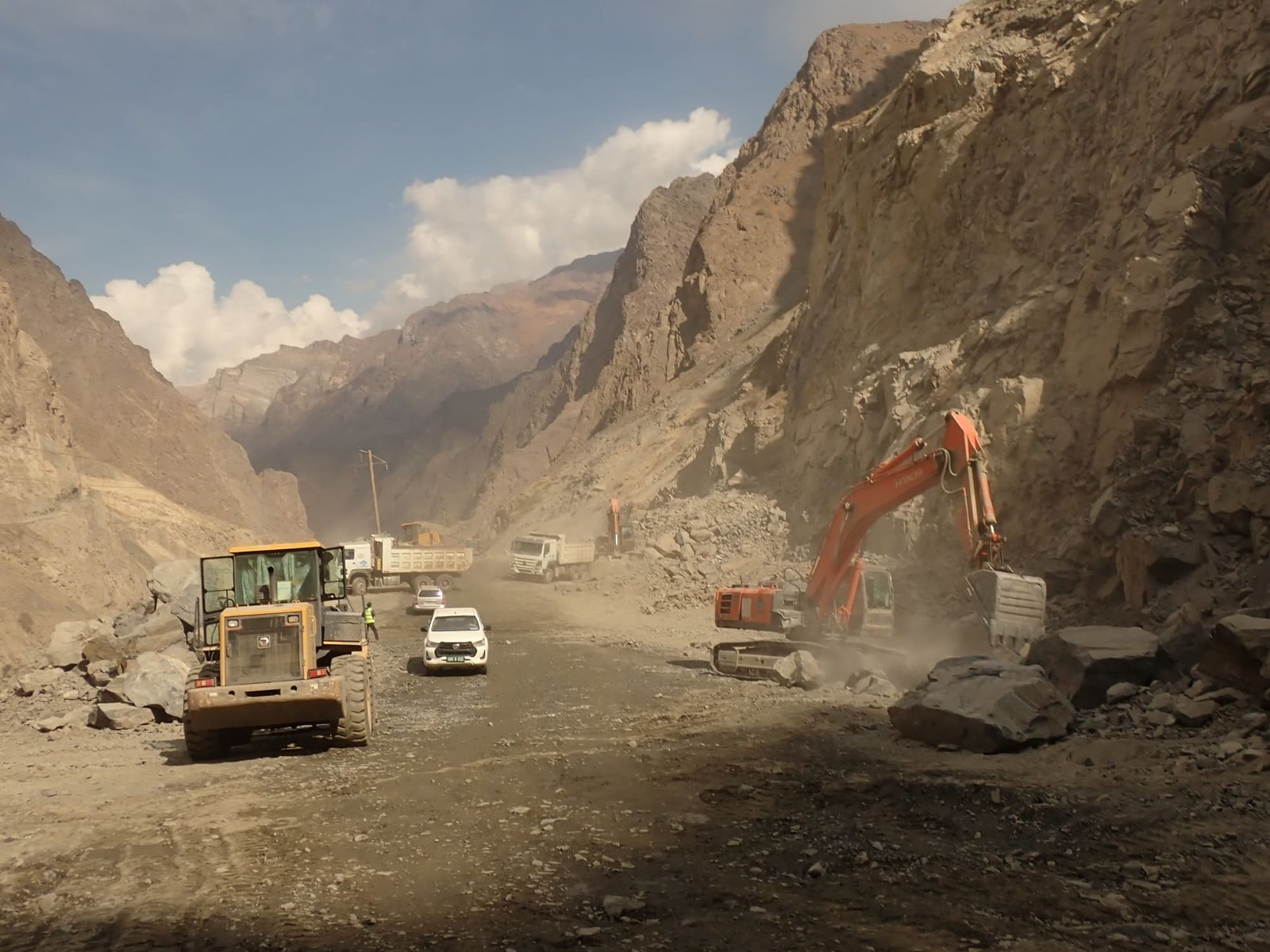
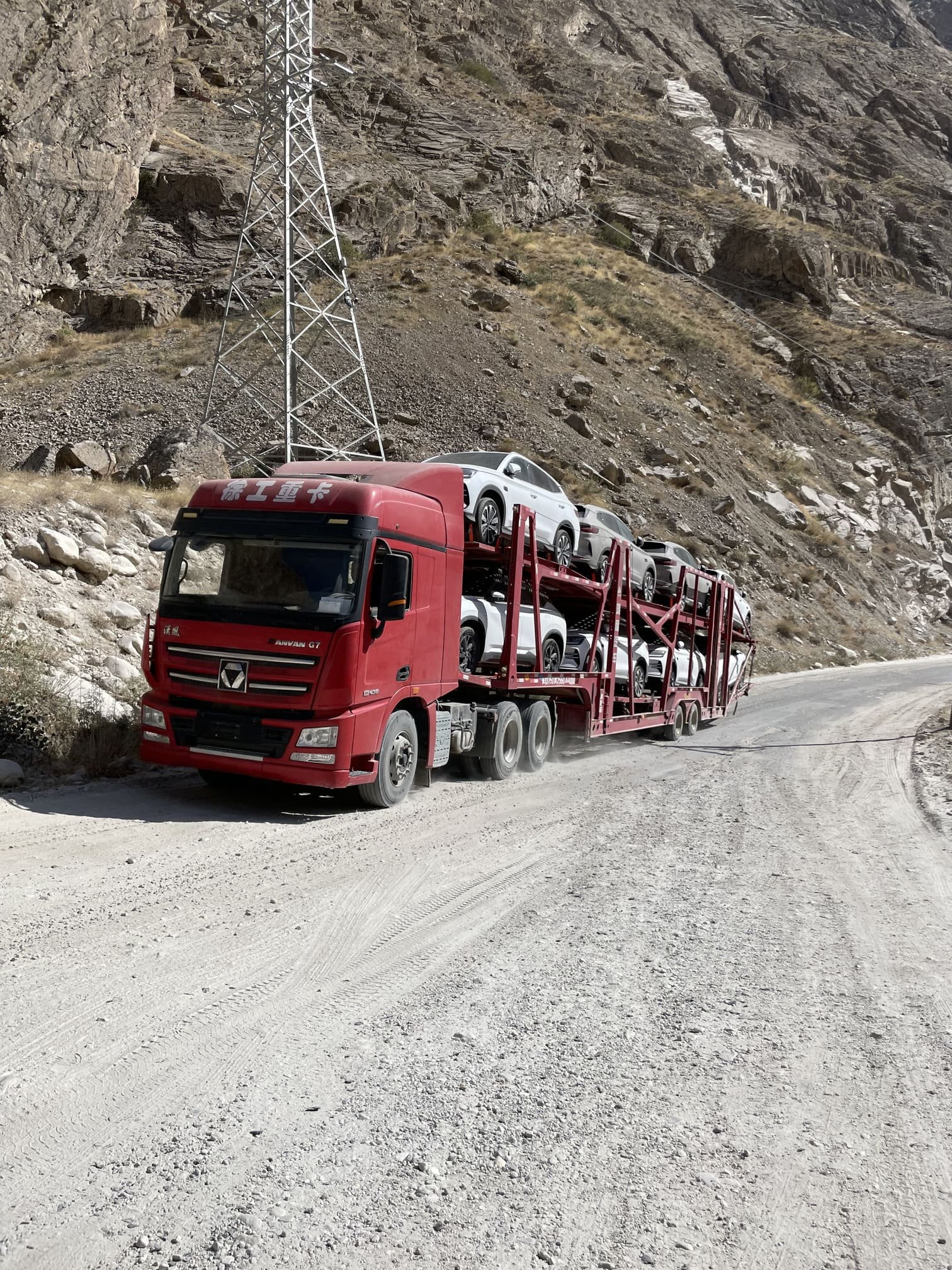
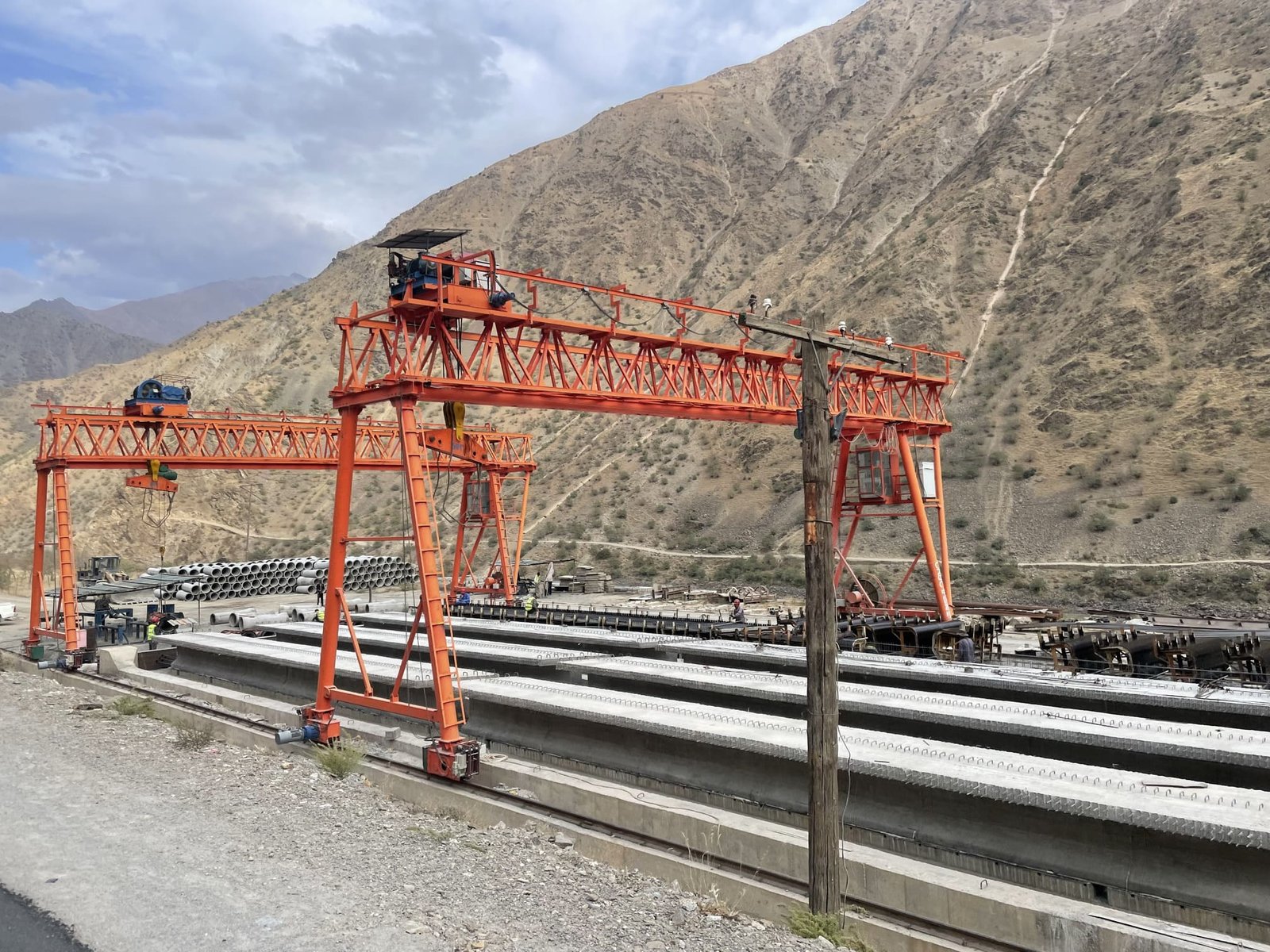
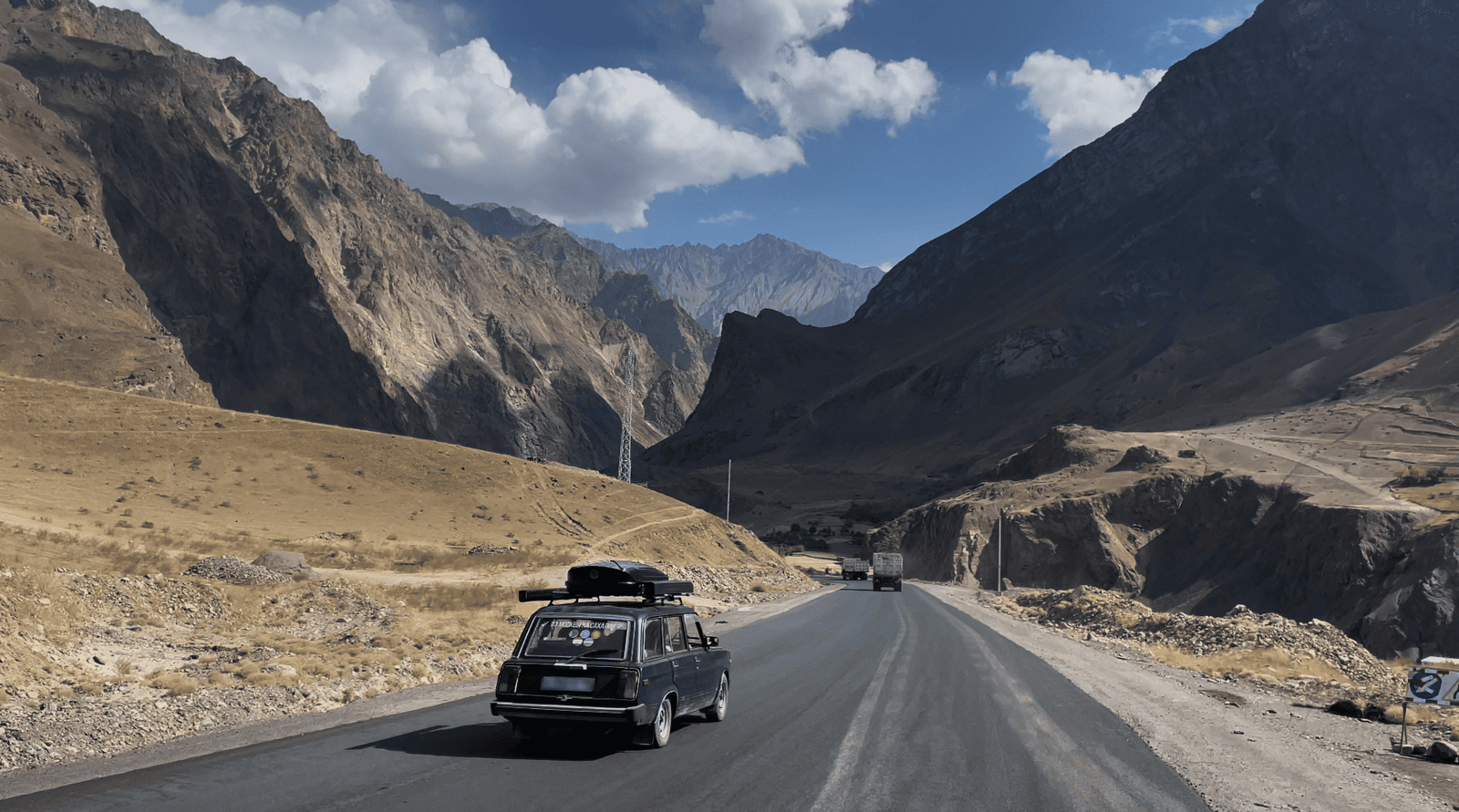
Their road, however, seems to be in much worse condition than the one on the Tajik side. On my side of the river, I sometimes get to enjoy precious kilometers of freshly laid asphalt before trucks kick up dust on the gravel sections. These modern vehicles transport all kinds of goods, such as the latest Chinese electric vehicles heading toward Dushanbe. The Middle Kingdom’s investments in roads must surely be paying off for them.
Laundry
Donkeys
"Holeproof" Fence
The gray and dusty hues of this corridor extend to the stone and thatched houses. Aside from the green of a few plantations, trees, and shrubs, the color palette tends toward a sandy monochrome.
The contrast between a feeling of confinement—trapped in the perpetual shadow of the mountains—and their sheer enormity is striking. Amid the dust, the torrents, the traffic, and the sounds of jackhammers, it’s sometimes hard to keep a smile on your face as you make your way forward. This stretch is as magnificent as it is oppressive.
Ever since I left, Tajik children have fascinated me. All dressed in two- or three-piece suits or dresses to go to school, their attire stands in stark contrast to the country’s dramatic landscape. Simple phrases like “Hello, how are you? What’s your name?” and little high-fives will be recurring and comforting exchanges. These English words—clear evidence of the popularity of these remote places among tourists and foreigners—will this rudimentary level of English ever be of use to them?
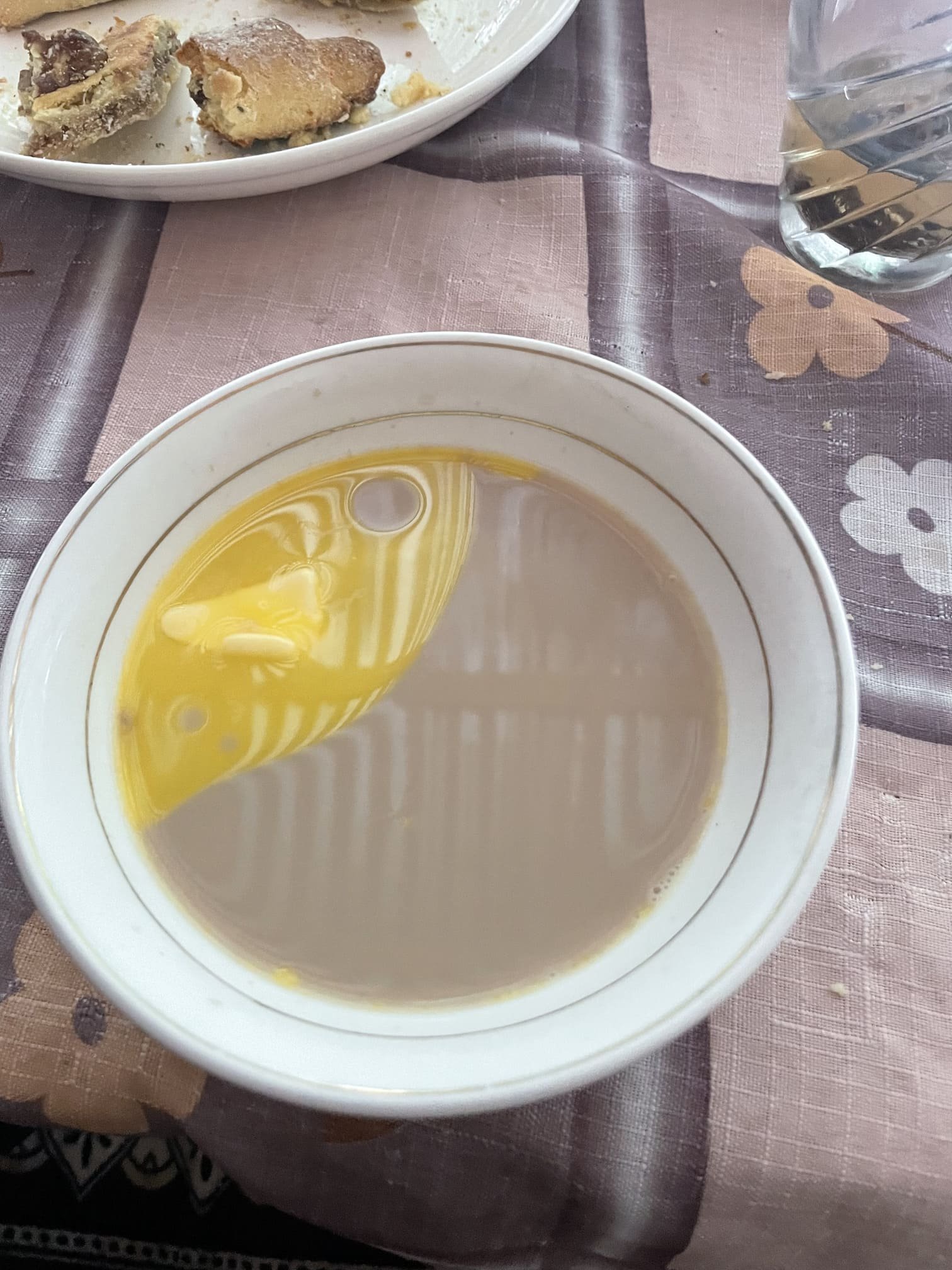
Loneliness is suffocating me, and my body has been wearing out these past few days. I head off to find lodging at an inn in Shipad. And what a great idea that was… My host provides me with a place to relax and delicious food. I even get to try Shirchoy, the salty tea that all the ethnicities of Central Asia drink. Here, they add butter and sometimes bread to make it a complete breakfast. It really fills you up.
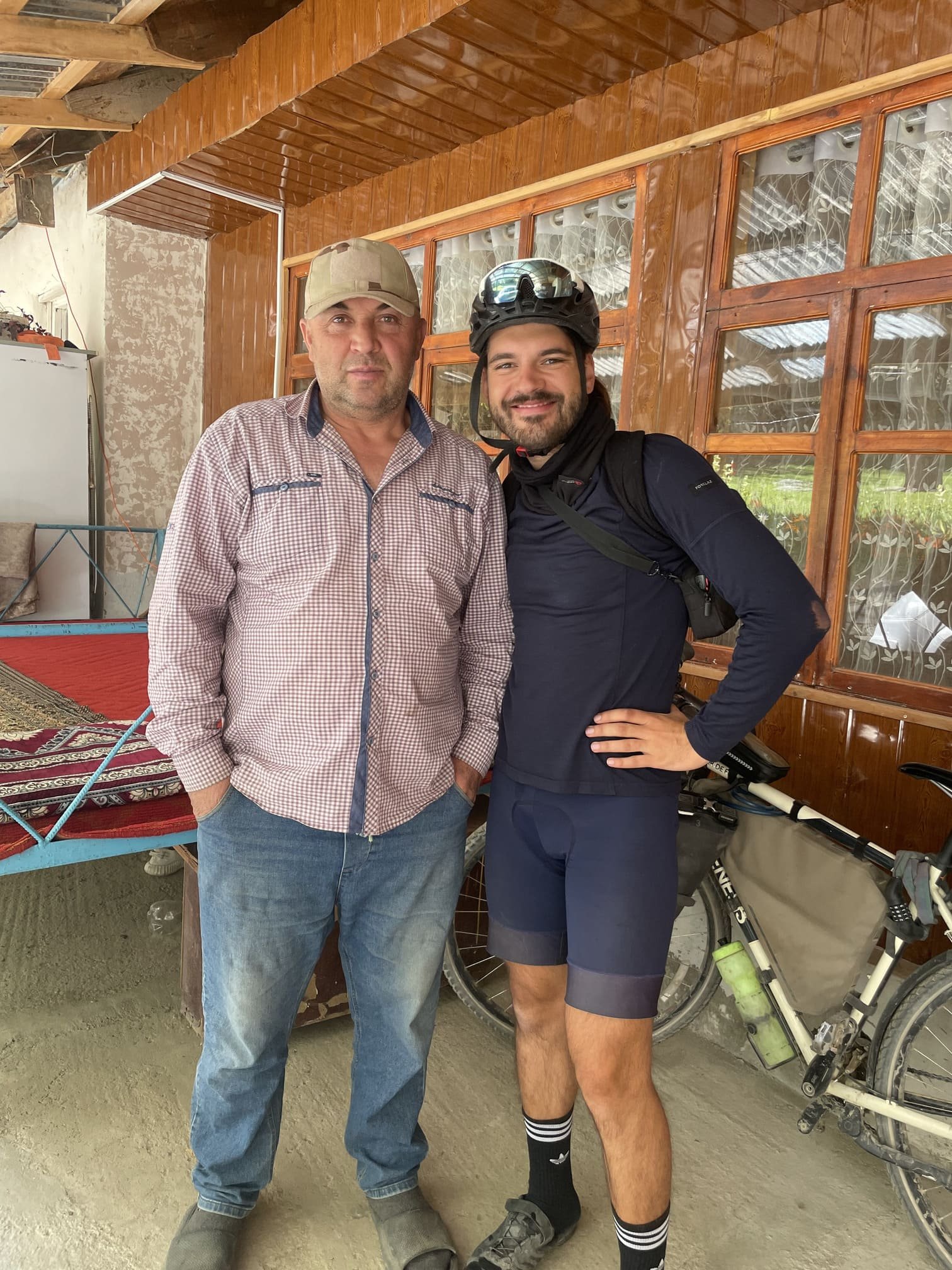
My Bro
My host
Shirchoy
The final days on the way to Khorog are still grueling, and my progress is… snail-like. The cold air and the bumpy terrain are taking a bigger toll on me than I realize, both mentally and physically. I have one last 15-kilometer stretch to go in the dead of night, and I arrive in Khorog full of hope that I’ll be able to recover… Little did I know about the stomach troubles that were about to hit me…
Tavildara – Khorog / Distance : 260 km / Elevation : 2600 m
4. Khorog: A Window onto Pamiri Culture
6th October 2025 19:00 – Khorog West
The capital of eastern Tajikistan will be a hub for encounters, but also the source of my stomach troubles.
Let’s start with the positive: the breath of fresh air brought by the new people we met at the Chiid guesthouse.
Popol and Montal. Two French guys on motorcycles, well into their journey from Marseille across Europe to Central Asia. We’re learning a lot from each other—especially when it comes to traveling on our respective two-wheelers. Let’s just say there’s a better chance I’ll travel like them one day than the other way around. I don’t need to spell it out for you to understand why. An evening of sharing experiences, but above all, of discussing shared cultural references. My goodness, it feels so good after several months without any contact with France. A few sips of cheap wine and Tajik cognac rounded out an evening that felt just like an aperitif on a friend’s terrace in the French countryside.
The American kayakers. Now, when you think of crazy adventurers, they’d be right at the top of the list. Hauling their kayaks by plane and 4×4, these thrill-seekers crisscross the globe, following rivers wherever they lead, just for the fun of it. A true lifestyle that goes with the flow. That’s what travel is all about—running into eccentric characters who remind us that, despite our own crazy plans, some people’s are always even crazier.
The Dutch duo. The pair would take me on one of the only boozy nights of my entire trip. A truly lighthearted interlude that would let me let loose before the days ahead—which would prove to be the biggest challenge of this Pamir crossing… well, after another unexpected challenge.
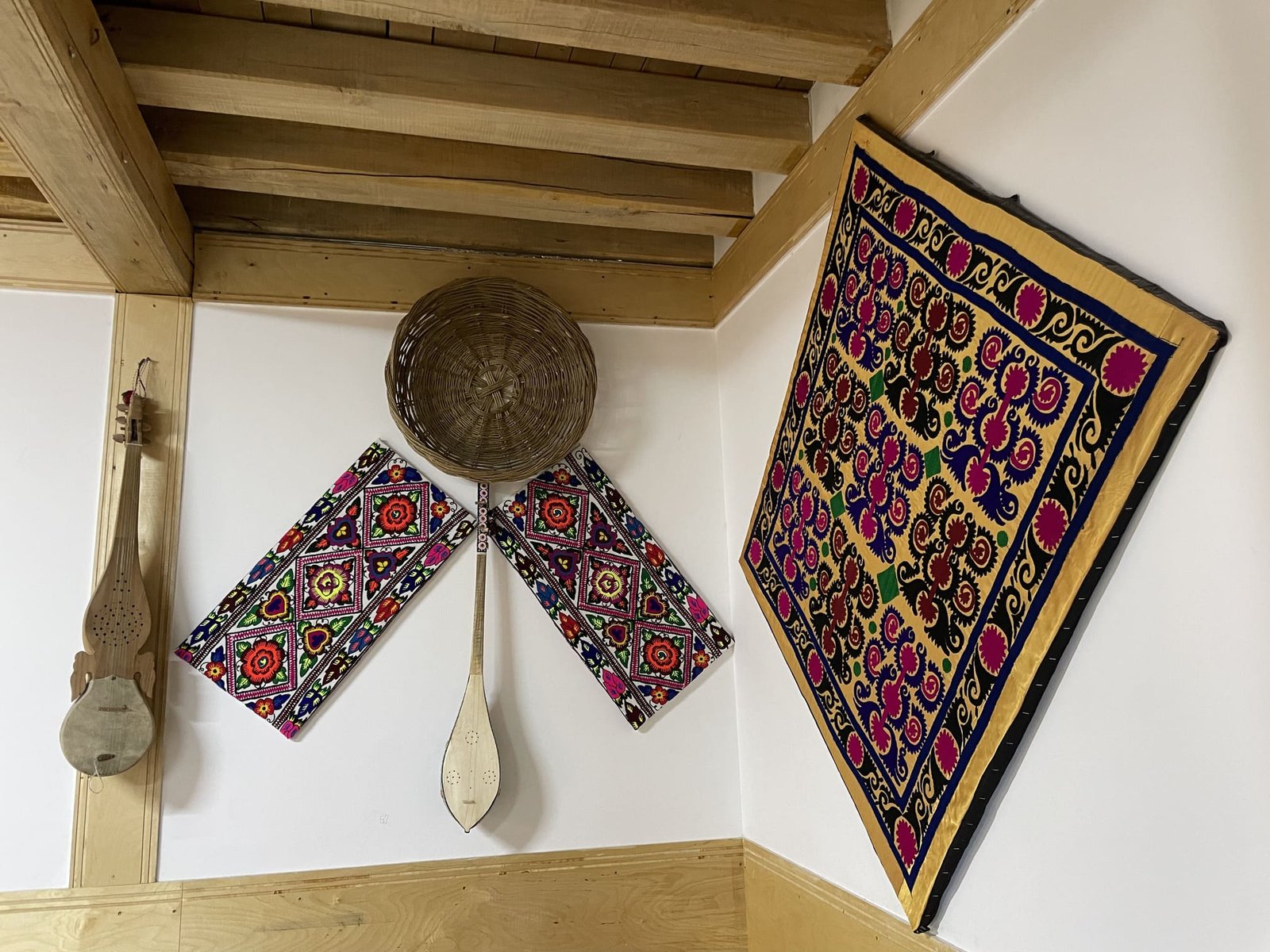
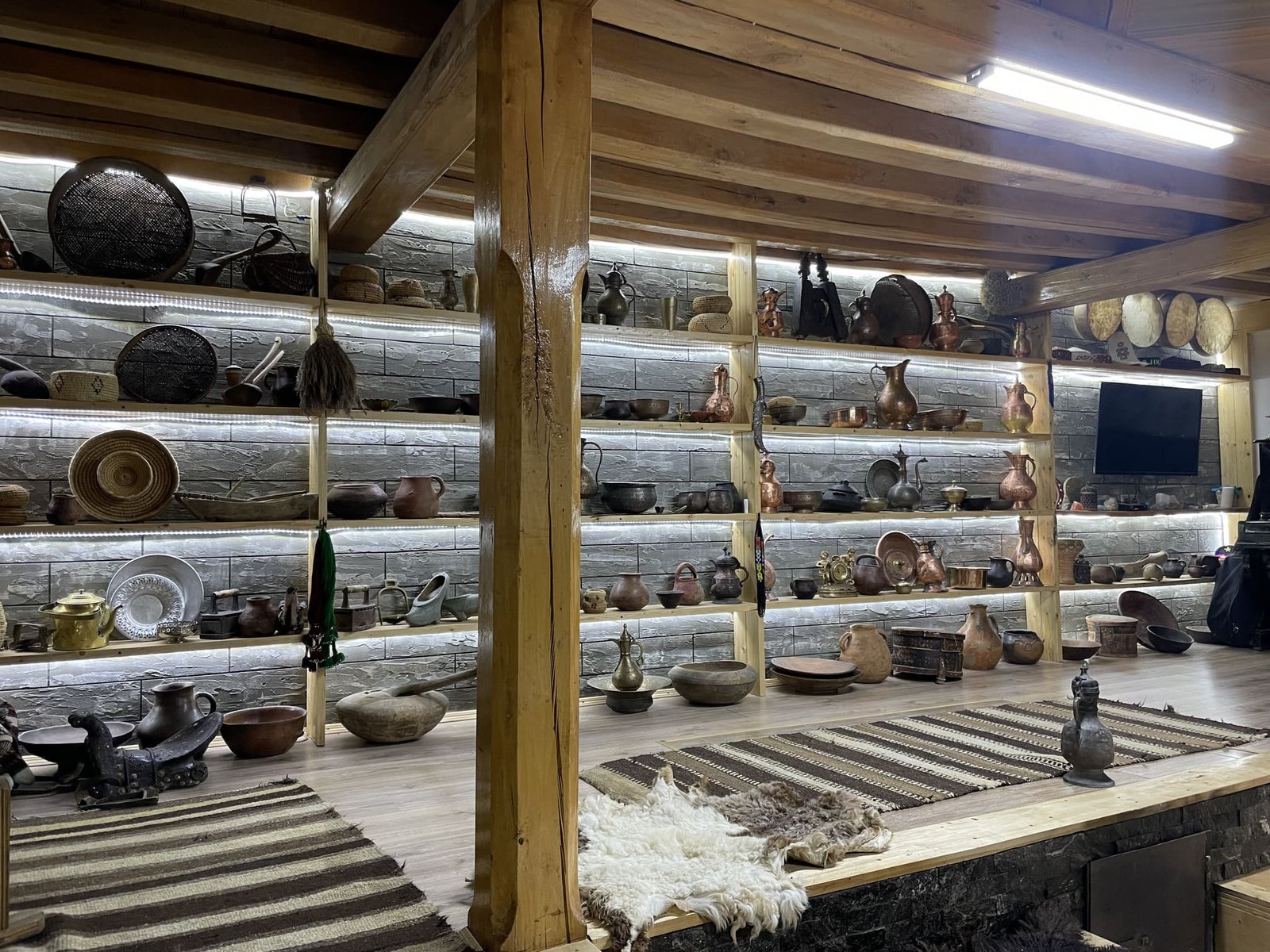
My stay would end up lasting four days instead of two, thanks to the almost inevitable “gift” for tourists in the Pamir: food poisoning. A hellish ordeal of bloating, diarrhea, and vomiting would make for two rather unpleasant days. Fortunately, the hostess, through her hospitality, made the experience more bearable. She cooked me easy-to-digest meals for my upset stomach. But above all, she taught me more about Pamiri culture through her little museum of local artifacts and architecture.
Khorog – Break : 0 km
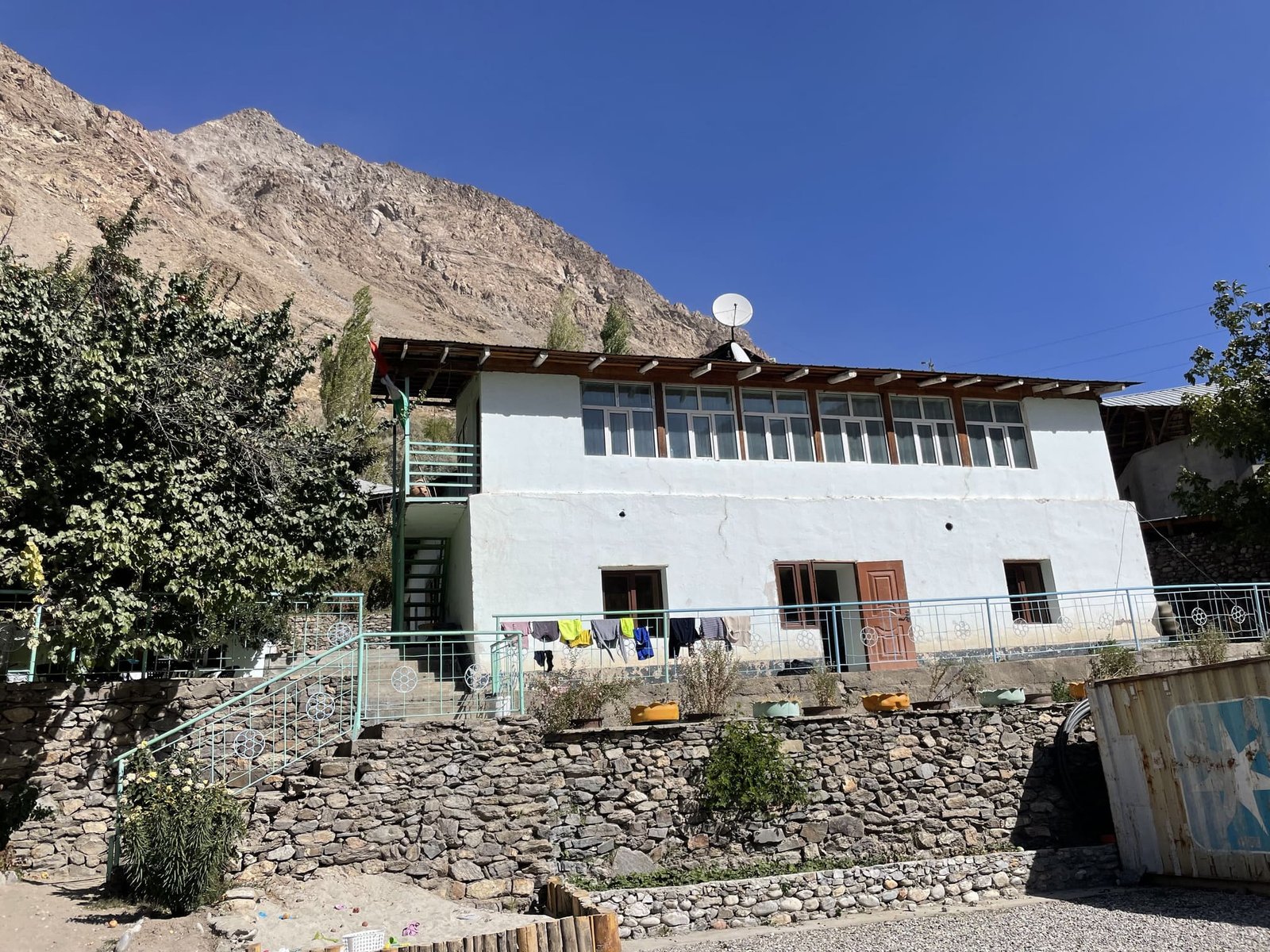
Chiid Guesthouse
Pamiri Rugs
Pamiris tools and tableware
Cultural Interlude: The Pamiris
This region of the Pamir is uniquely distinctive and rich, yet largely unknown. The Pamiri people are very different from the Tajiks or the Afghan Pashtuns. You may encounter people with lighter-colored or even blond hair and blue eyes—a phenomenon unique in Central Asia.
As Ismailis by faith, they could be described as moderate Muslims with more permissive beliefs. They gather at the temple, pray as they see fit, and have a more esoteric approach to Islam. From what I understand, the Pamiri people are the Tajik counterpart to the Wakhi people living on the other side of the Panj River in Afghanistan. Their shared culture is reportedly under threat. Either by a Tajik government seeking to replace them and reshape their territory as it sees fit (leading to the slow disappearance of the local language and customs), or by an Islamist regime in Afghanistan that shows very little tolerance for a more liberal faith. Their existence is all the more fragile because their language is a constellation of dialects that differ from village to village. This fragility resonates deeply with my Alsatian roots and the richness of the small dialects that vary from one area to another. These are cultural exceptions that must be protected “at all costs,” as the saying goes.
This forced break has at least allowed me to get a glimpse of this culture. I’ll be leaving it behind tomorrow with a slight sense of unfinished business. From Pamir with Love.